a treatise on culinary disrespect
DEC 11, 2024
I hadn’t written to my sister for a few days. All the while, she goaded me with bits of news, open-ended questions, and threats both veiled and traditional. Fed up with receiving little more than the occasional proof-of-life grunt, she brought out the big guns.
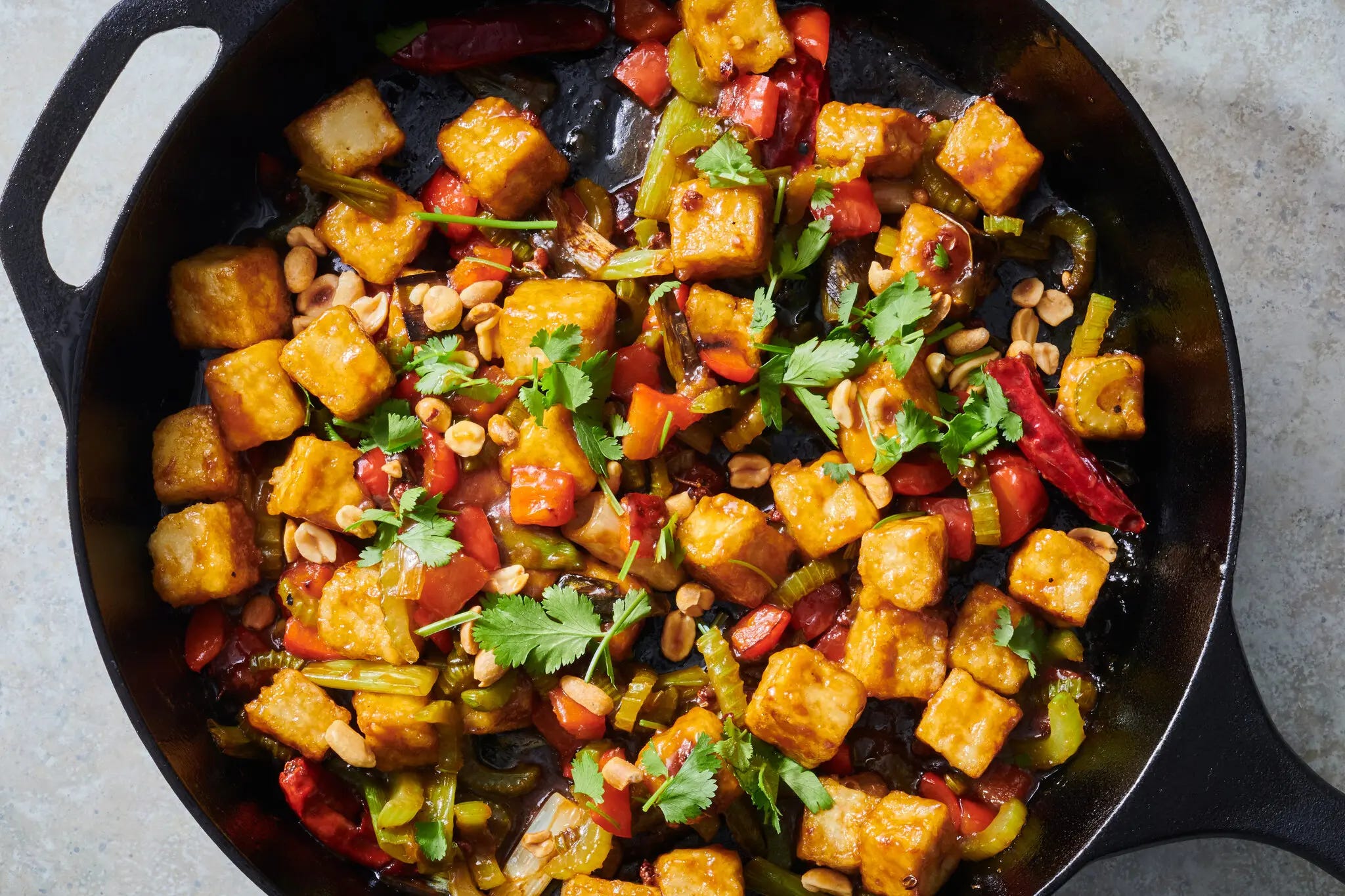
Being the youngest in the family means growing up with instinctive knowledge of how to bait your older siblings. My lovely younger sister knew that picture would elicit an immediate response, a tirade even, though she probably didn’t know that tirade would be on my Substack.
Simply put, what in the holy hell is this goopy mess?
According to the NYT, it is someone’s “vegetarian take” on kung-pao chicken, which tells us precisely nothing, so I stand by my original phrasing.
Let’s just start with one simple observation:
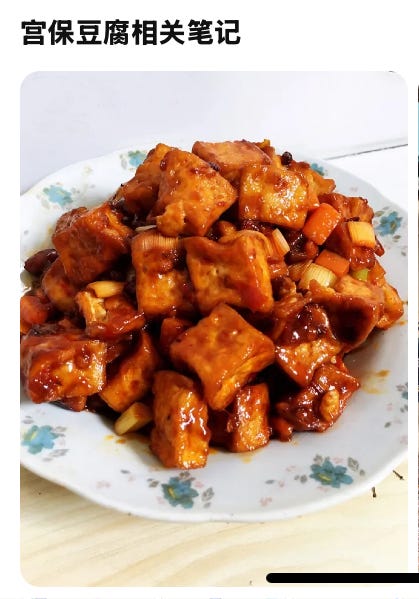
China already has a “vegetarian take” on kung-pao chicken. It is called — wait for it — kung-pao tofu. Some quick research on my phone confirms that I have no fewer than fifteen choices for that exact dish within a half hour of my front door. (Duly noting here that said front door is located in Beijing.)
Starting with the obvious, what’s with the NYT’s “skillet” fetish? There is a perfectly good pan for making Chinese fried dishes, and that is a wok. Assuming that people might not have one of those hanging around, you can most certainly swap out an ordinary flat-bottomed frying pan. A cast iron pan like the one in the photo will heat and cool slowly, meaning that it is good for good for techniques that need a constant temperature, ones like pan frying and stewing. Chinese cuisine has plenty of dishes that use one or both of those two, but this dish ain’t one of them.
Even taking into account how the storied evolution of kungpao has produced a wide range of regional variations, this recipe is a mess. It calls to press the tofu cold, which will cause the tofu to break. It adds red pepper and celery, which sound like a pretty Midwestern combination, especially if we follow the instructions to pan fry them until they “char.” It cooks the onions at the beginning, which will make them mushy. It adds chiles at the end, which accomplishes nothing, and then decorates the finished dish with peanuts and cilantro, because all Asian dishes need cilantro, apparently. Literally nothing in this recipe—tragically one of the year’s most popular—makes sense.
It may sound like I’m banging on about authenticity, but I promise that’s not the issue.
Any historian will tell you that traditions are invented and that the whole idea of authenticity is just good marketing.
But when Jamie Oliver publicized his “take” on paella, the nation of Spain nearly declared it a war crime. And all he did was add chorizo.
This recipe is more akin to adding cut-up hot dogs and slices of American cheese.
Could you make a decent job of this dish using red peppers and celery?
Absolutely. But to do that, you would need some basic respect for Chinese cooking techniques. The cut celery would be softened by a quick dip in hot water, with a few drops of oil added to preserve the color. Red peppers—if you must—could be added directly, or dunked in hot oil to soften. The chicken, pork or tofu should be partially precooked before it goes into the pan. Ideally all of the ingredients would be cut into thin strips, not chunks.
Actually, now that I think of it, that dish in fact already exists. Swap out fresh red pepper for peppers pickled in vinegar and we are half way to making another Sichuan favorite—yuxiang. Just like kongpao, you can make this dish with meat, tofu or eggplant, for those so inclined.
The real crime here is that there is no mystery to any of this. There are dozens of Youtube channels that can teach you these basics. What I don’t understand is why someone felt the need to provide their “take” on such a simple and elegant dish, when the original preparation is so much better and certainly no more difficult.
I won’t throw around the idea of cultural appropriation because I don’t think that’s in any way what was intended. But the deeper question remains why the NYT couldn’t be bothered to source their Chinese recipes from someone who actually had an elementary knowledge of Chinese cuisine.
 Thomas David DuBois