China’s fourth season of Autumn (October 8-23)
The fourth season of autumn is called Hanlu. Meaning “cold dew,” the name strikes a tone significantly more ominous than the season of “white dew” just a few weeks back.
White dew sounds like it could be a refreshing dessert. Cold dew is nothing less than a portent of death.
Hanlu sees chrysanthemums suddenly burst into bloom just as the rest of nature is beginning to power down. As one ancient text described it:
“trees and grasses thrive in yang, only the chrysanthemum flourishes in yin.”
草木皆華于陽,獨菊華于陰 《国语》
(That same text also says that birds during Hanlu dive into the sea and transform into mollusks and honestly, I don’t know what the hell to do with that.)
Autumn is a time for dried foods. That means both making and eating.
Summer may give us the hottest sun, but the cool air of autumn is ideal for the actual process of drying. This is just as well, since autumn also brings the harvest, which has to get brought in and processed as quickly as possible.
In the corn-growing villages of southern Hebei, where I spent a year doing doctoral research some two decades ago, every courtyard is now covered in a golden blanket of corn cobs, laid out to dry in the crisp autumn air. After a couple of weeks, the desiccated cobs will be run through a hand crank machine to strip off the hard-as-rock kernels, which get stored up in small silos kept just inside the front gate. Some of the harvest will be sold, the rest will be ground up in small batches to make porridge and cakes over the coming year.
Pretty much any food can be dried. And once it is dried, it takes on a new life, culinarily speaking. Those mushrooms languishing in the fridge? Spread them out on a paper towel and leave them on the kitchen counter. If the weather is reasonably dry, that’s about all you need to know. At most, you might have to come back and flip them over once a day.
For your efforts, you are rewarded with dried mushrooms that not only last indefinitely, but also bring a more mature, more concentrated taste to whatever soup or broth you might want to drop them into. Think of them as the fungus kingdom’s equivalent of raisins.
Juicy vegetables like tomatoes take a bit more planning. You might even need to use the oven, fan on and temperature set as low as possible, but the basic logic is still the same. Slice your excess fruits or vegetables to expose as much surface area as possible, set them out to encourage air circulation and let nature run its course.
I recently acquired some dried winter melon. The long, thin strips are made by turning the giant peeled melon like wood on a lathe. Dried winter melon was a real find. Stewed or steamed, the dried melon holds its texture. While fresh winter melon is very watery, the reconstituted strips stay firm but not chewy.
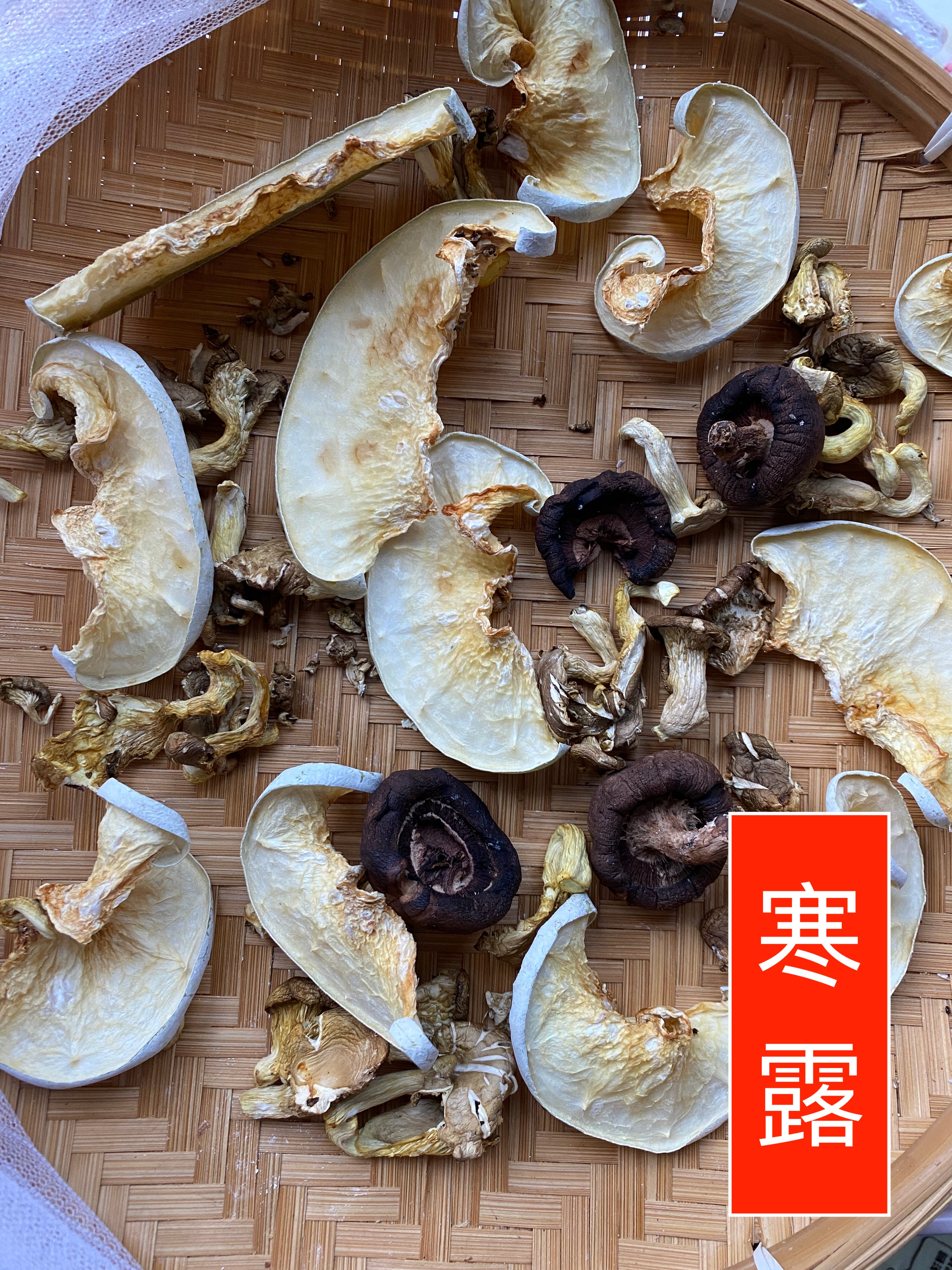
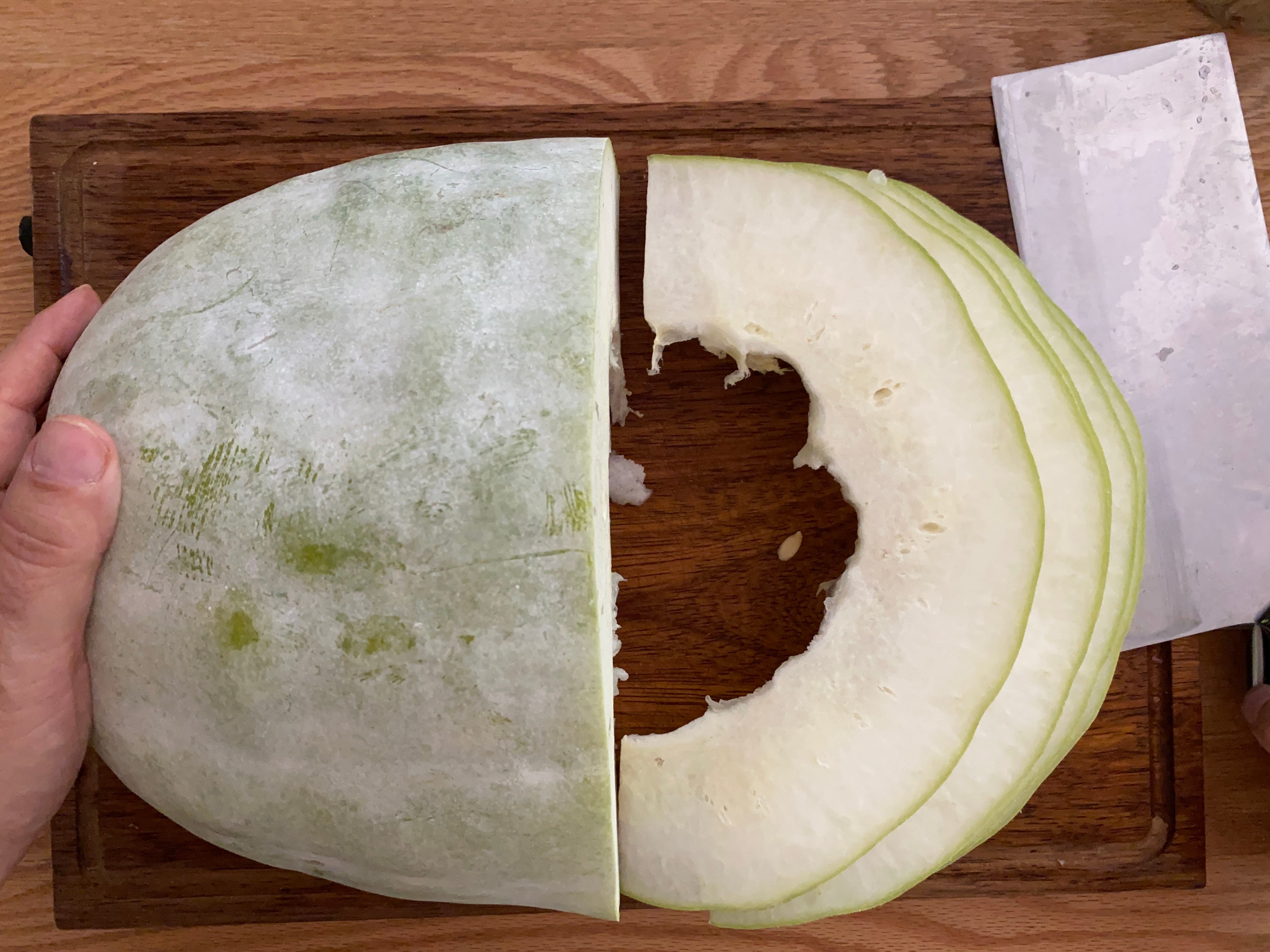
I also acquired a fresh winter melon. Quite a beast, as winter melons are wont to be. This one is the size of a very large watermelon and will last just about as long, so I need to get creative and fast. Seeing that two pots of soup had barely put a dent in my newfound melonic abundance, I decided to try my hand at drying a very small portion of the remainder. I cut slices thick enough to stand on their own and arranged them on a tray in front of a breezy open window. Additional structural integrity in the form of a few mushrooms ensured the slices didn’t fall over. After three days, I had a tray of dried vegetables and an inspiration for the lovely fall soup below.
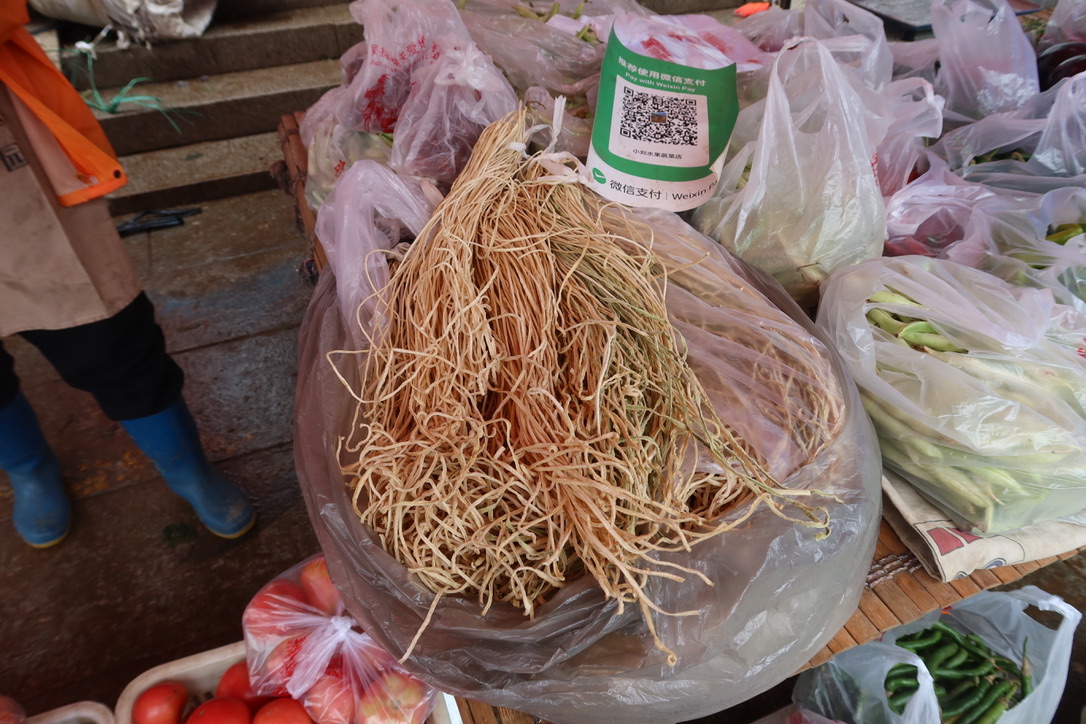
Chinese cuisine makes wonderful use of all manner of dried foods. Besides the usual mushrooms and chilies, my kitchen contains a stock of dried bamboo, various dried seaweeds, and dried eggplant. Some salted, some not, all extremely umami rich. (And we haven’t even mentioned the wonderful alchemy of dried seafood)
Dried vegetables can be reconstituted and cooked, or used directly in soup, like the pork rib soup given below.
Autumn soups not only make good use of the uniquely concentrated flavor of dried vegetables; they also keep you warm and hydrated as the world around you dries out.
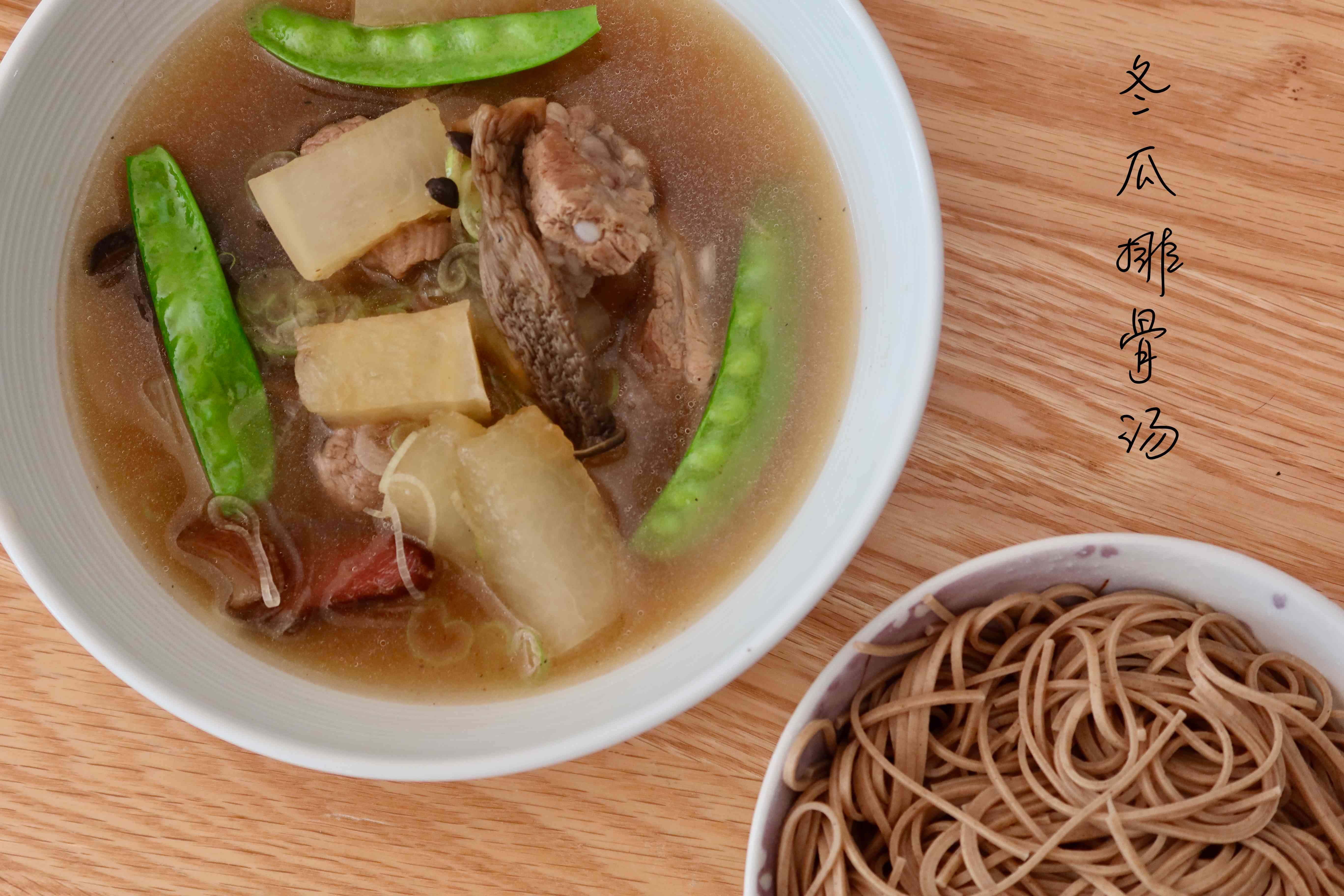
Pork spare rib and winter melon soup
– Marinate cross cut spare ribs (2 or 3 pieces per serving) in a splash of Chinese cooking wine, wrung (not chopped) green onions, grated ginger and white pepper. This step removes the “blood” taste and leaves a cleaner tasting meat. A few minutes will be enough.
– Make your soup base by simmering one large handful of dried mushrooms, ½ teaspoon salt and one tablespoon soy sauce or oyster sauce per liter of water. Keep the salt low—you can always add more later. You can also add other umami-builders like a small slice of Chinese ham, a square of konbu seaweed, or a spoon full of fermented black beans to further round out the flavor. Cover and simmer for ten minutes.
– Parboil the marinated ribs in pot of fresh water for about two minutes. Drain away the water and add the parboiled ribs to the simmering soup, along with slices of dried winter melon or large chunks of peeled fresh winter melon. Cover and simmer for final ten minutes
– Remove from heat and stir in a few fresh pea pods, thinly sliced spring onion and a sprinkle of white pepper.
 Thomas David DuBois