I miss taxis.
Ride hailing apps are convenient, but at least in China, the experience feels a little lifeless. Taking a Chinese taxi back in the day was like a ride on a human roulette wheel. Sometimes drivers would want to talk about Madonna or Michael Jackson, who they assumed I knew personally. Sometimes they would just share their views of the world. Passengers had to join in, since we couldn’t pretend to be checking our phones.
I still take taxis when I can, and was rewarded a few months ago when a driver in Beijing told me about a dish from his childhood, one that he feared he would never taste again. The dish was called yupi mian 榆皮面, meaning “elm bark noodles.” I initially thought he meant 鱼皮面 “fish skin noodles” (which sounds the same, and frankly made a lot more sense), until he swerved over to point out the elm trees along the side of the road, saying “those! we used to eat those!”
Of course I was intrigued, so I went online and found someone who sold food-grade elm bark flour, as well as a recipe for noodles, consisting of half bark flour and half wheat flour, which the site said to mix with water and extrude directly into a pot of boiling water, just like spaetzle. (This by the way would make them geda 疙瘩, not mian 面)
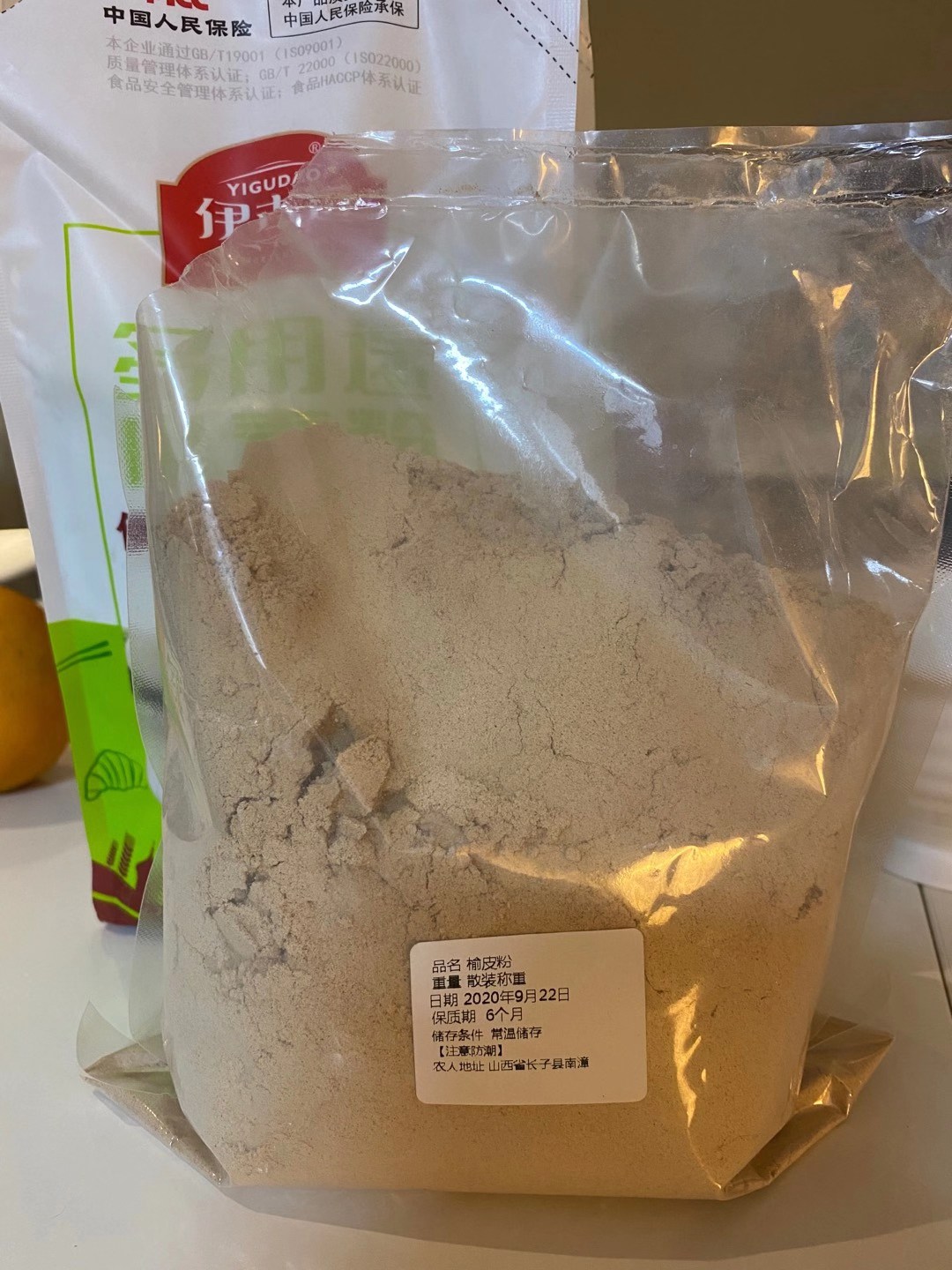
The day soon arrived, and I mixed up a batch, noticing immediately that the elm bark flour refused to absorb water. Even after letting the dough rest in the refrigerator, the water just sat on top. The whole mixture was heavy and a little slimy.
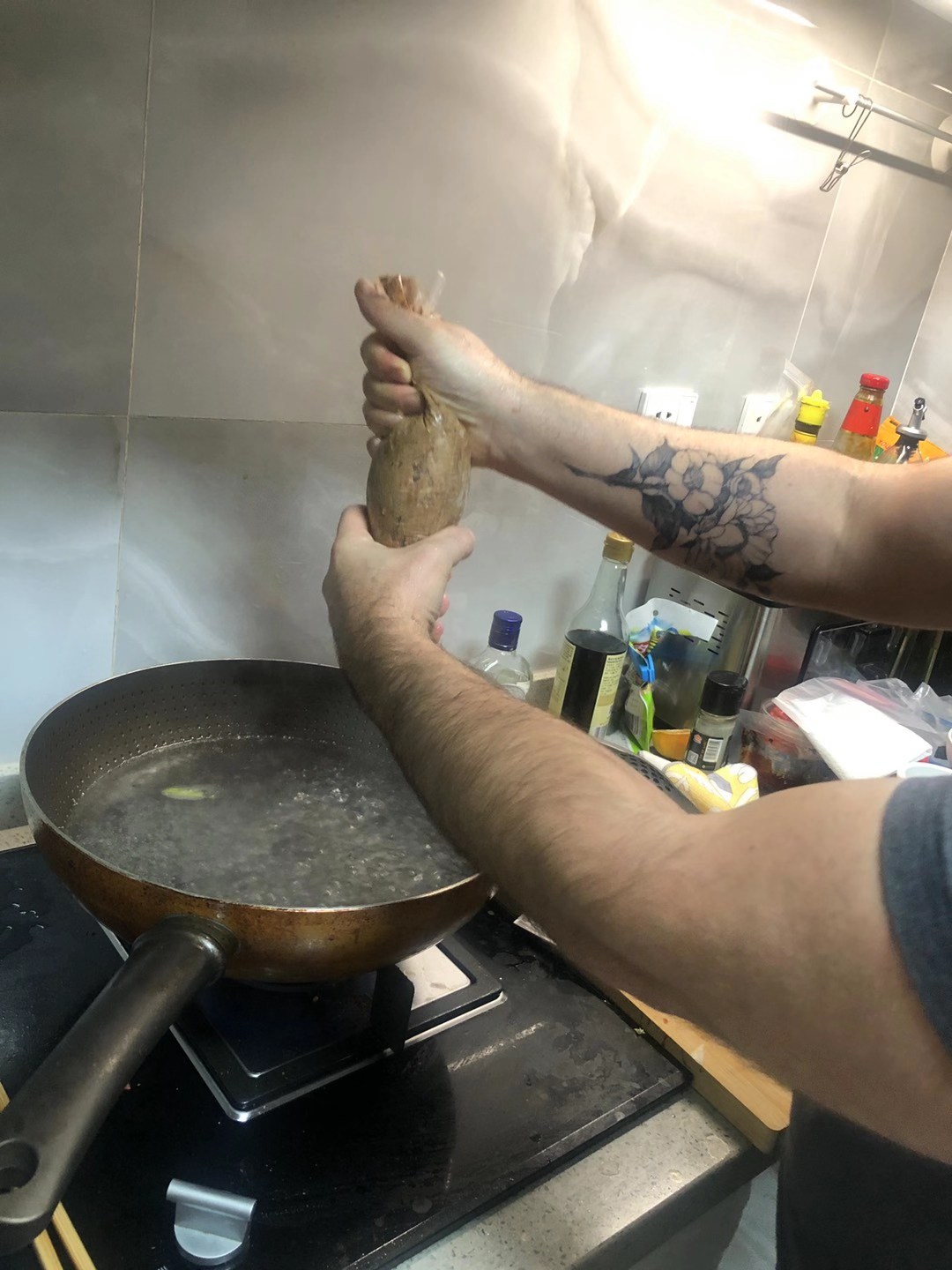
Cooking was nothing like spaetzle. I split a couple of pastry bags before going with the more “college dorm” method of simply scraping noodles from the side of a bowl. The increasingly slimy consistency of the mix made this all much more difficult.
Eventually I wrestled out a pot full of the noodles, and only then realized that the slimy consistency of the dough was not going away–it was there in the cooked noodles as well. In fact the consistency was the main characteristic–the noodles didn’t taste like much, and felt somehow inorganic. Nor was their brief stay in my gut a particularly pleasant one.


But I’m reluctant to give up on elm bark noodles altogether. I think I could make this again, but as rolled noodles, and with a much smaller ratio of bark flour, maybe 1:5 not half and half, and have something nice.
I’m also curious about the sliminess. Some Google searches led me to a North American tree called slippery elm, which has a slimy bark that is in fact used as medicine. Among much else, it is supposed to encourage bowel movements, a function these noodles performed like champions.
 Thomas David DuBois
It was a joy to read this piece Thomas and I am so glad not to have to eat your elm bark noodles!
What amazes me is that eating cellulose could become a fond childhood memory!
I think the taxi driver is referring to 餄餎 (hele): https://zh.m.wikipedia.org/zh-hk/饸饹
The elm tree bark is a major ingredient as it holds everything together; this way you can make noodles out of flour that usually does not stick together enough to make a dough. You are supposed to extrude it through a rather rigid apparatus (commonly made out of wood or steel) to form the shape; the wiki page has a picture of the machine.
We had this noodles again this Chinese new year and our recipe for the dough was wheat flour, rice flour, and elm bark powder.
That is extremely good to know, as I still haven’t managed to try the proper version of this dish. I have since seen a couple of places selling what they called 榆皮面, but then find that it’s just ordinary wheat noodles–although extruded like the ones you describe. One stall owner told me that 榆皮面 was in fact just the name of the dish, which was obviously not true!