春分之日,玄鳥至,又五日,雷乃發聲,又五日,始電。玄鳥不至,婦人不娠,雷不發聲,諸侯失民,不始電,君無威震。《逸周書》
On the day of Chunfen, the xuan bird arrives. After five days the thunder sounds. After another five days, lightning begins. If the xuan bird does not arrive, women will not become pregnant, no thunder will sound, and princes will lose their people. If the lightning does not begin, the king will lose command. (Lost Book of Zhou)
Spring is officially here — in fact by China’s traditional calendar we’re already halfway done.
Each of the four cardinal seasons (spring, summer, autumn, winter) is divided this way, with one two-week cycle to mark the beginning, and another at the point that things are picking up steam. That’s where we are on March 20th with the beginning of Chunfen, the Spring Equinox or Spring Watershed. Or if it was an 80’s movie sequel, Spring Harder.
As always, the Beijing weather finds a way to oblige. Seemingly overnight, the bare landscape of sticks and dirt has popped to life. One week ago, the budding trees sprouted a hazy green halo. With grass just starting to shoot up, the gardeners decided it was time to fantu, turn over the soil. This is done by hand, shovel by shovel. Not just here, but in farms across the country, usually as a precursor to spring planting. Besides keeping down weeds, turning the soil is intended to release unhealthy qi that would have built up over the winter in the decaying plant of the previous year.
Everything about this season celebrates rebirth and growth. After a winter of tubers and cabbage, people are again returning to green leafy vegetables. Northern cities like Heze and Luoyang hold competing peony festivals. Further south, trees are exploding into bloom: malus, pear flower and magnolia, in that order.
Chunfen is more than just incremental change. The spring and autumn equinoxes are literal earth-turning moments. According to ancient sources, Chunfen is when the dragon ascends to heaven, where he will remain until Qiufen, the autumn equinox. Chunfen marks the return of the mythical xuan 玄 bird, which stays until – you guessed it, the autumn equinox.1
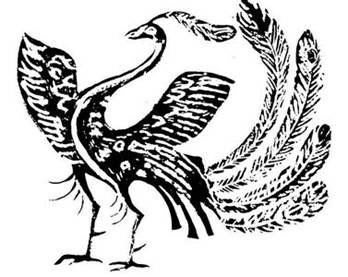
“Behold, for I am fancy! I am spring!”
Because Chunfen announces the ascendance of yang forces of warmth and sunlight, it was traditionally marked by ceremonies of solar reverence. Not “sun worship,” mind you, the sun was never personified in the way it was in some other traditions. Rather, this was a ritualized demonstration of gratitude and alignment with the forces of Heaven. In the capital, the emperor would perform these ceremonies, but the custom itself was practiced long before that. Numerous ancient texts record this custom of solar reverence (祭日) as a way of keeping pace with the great clock of nature.
天地之氣,莫大於和,陰陽調,日夜分,故萬物春分而生,秋分而成《文子》
Of all the forces of Heaven and Earth, the greatest is harmony. The alignment of yin and yang, the division of day and night. All things are born in spring and mature in autumn. (Wenzi)
 Thomas David DuBois