How to eat in China’s 14th season
Aug 22- Sept 6
An old saying describes the season of Chushu in three phases:
一候鷹乃祭鳥
二候天地始肅
三候禾乃登
In the first, the eagles offer smaller birds as sacrifice
In the second, Heaven and Earth become solemn
In the third, the grains are mature

It’s hard to know where the saying actually comes from. The striking imagery of eagles making “sacrifices” of their fellow birds appears in a calendar from the 13th century, and before that in a poem from Tang dynasty poet Yuan Zhen (779-831). A much more ancient written reference is found in the Confucian Book of Rites, which dates back to 3-5th century BCE. The image was most likely around in folk songs and sayings well before that.
So what does this very old expression actually mean? On one level it simply means that the birds of prey are out hunting. Chushu is after all when their smaller prey are nice and fat from gorging on ripening late-summer plants. But it also alludes to the religious calendar, since this season follows Zhongyuan. Sometimes translated as the Ghost Festival, Zhongyuan is the moment in the year when the prevailing winds of yang turn to yin, and is marked by various festivals to honor and welcome the dead. This is indeed a season for sacrifice.
The idea that “Heaven and Earth become solemn” means that the crazy exuberance of summer growth has passed. By Chushu, nature has become mature and all of that lush greenery is just on the cusp of beginning to wither. It fits the way essayist Lin Yutang described his favorite season:
I like spring, but it is too young. I like summer, but it is too proud. So I like best of all autumn, because its leaves are a little yellow, its tone mellower, its colours richer, and it is tinged a little with sorrow and a premonition of death
The saying that the “grains are mature” refers specifically to those grains written with the character 禾 . That is, ones like millets 黍, 稷 and flooded-field rice 稻. It is harvest time.
So in other words, Chushu is the moment of change, the last gasp of summer heat and the first glimpse of the cooling to come.
This name of this second season of autumn literally means the “end of heat.” The weather is still hot and muggy, but we are seeing the last gasps of the season—the dying splendor that Americans sometimes call Indian summer. On the smaller scale, our bodies are still trying to release the extra heat of summer.
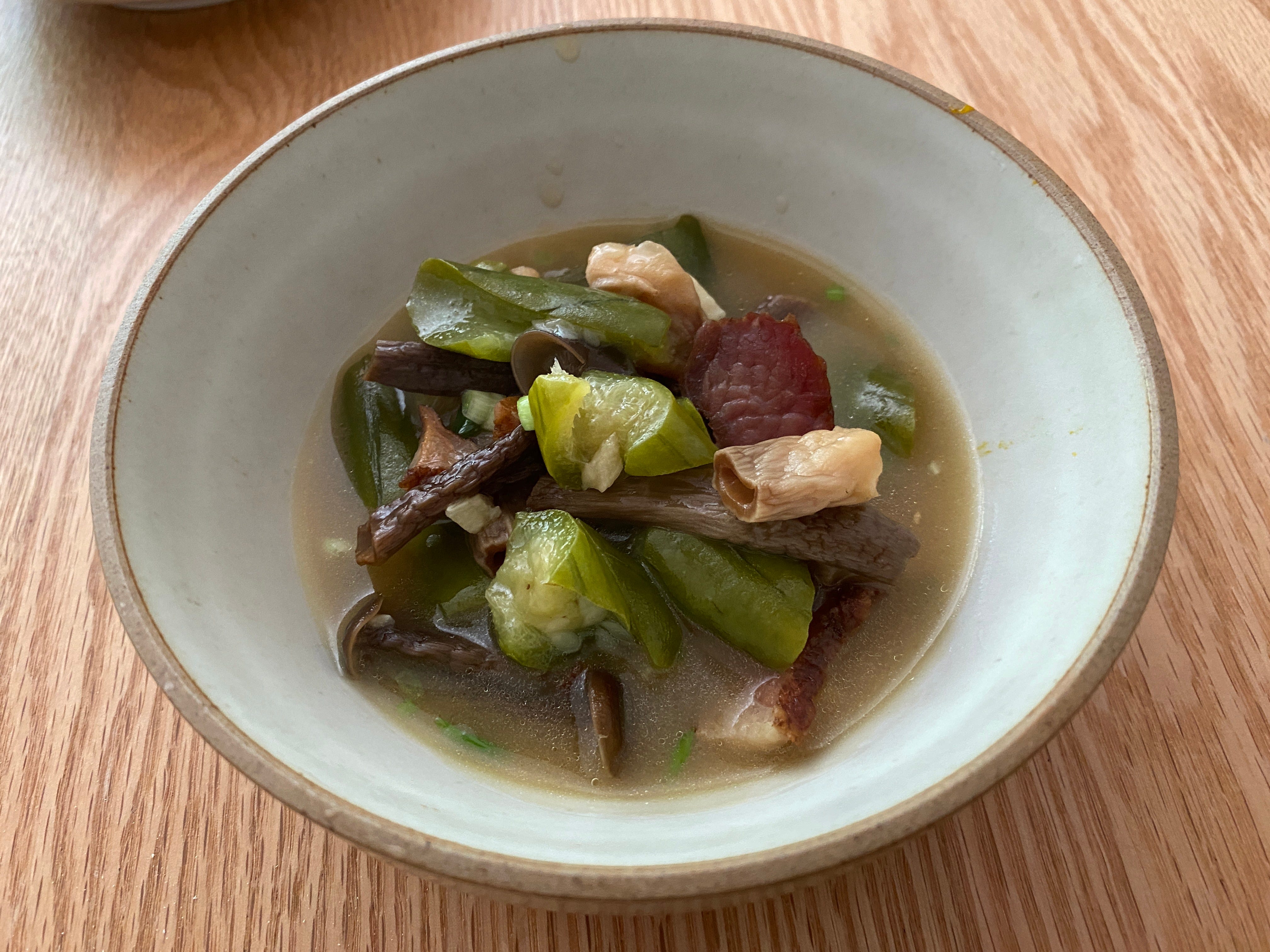
To do that, you need to eat cooling foods. Not cold ones, like ice water, but foods that are cooling in nature. According to the Tang dynasty Pharmacy of Gastromedicine, this season calls for spinach, pears, lotus root, cow milk, red beans, sticky rice and all sorts of cucumbers and melons.
Throughout China, duck is a common way is to mark the beginning of Chushu, both because duck is a cooling food, and because the birds of this season are at their tastiest.
 Thomas David DuBois