September 7-21
Welcome to China’s third season of Autumn.
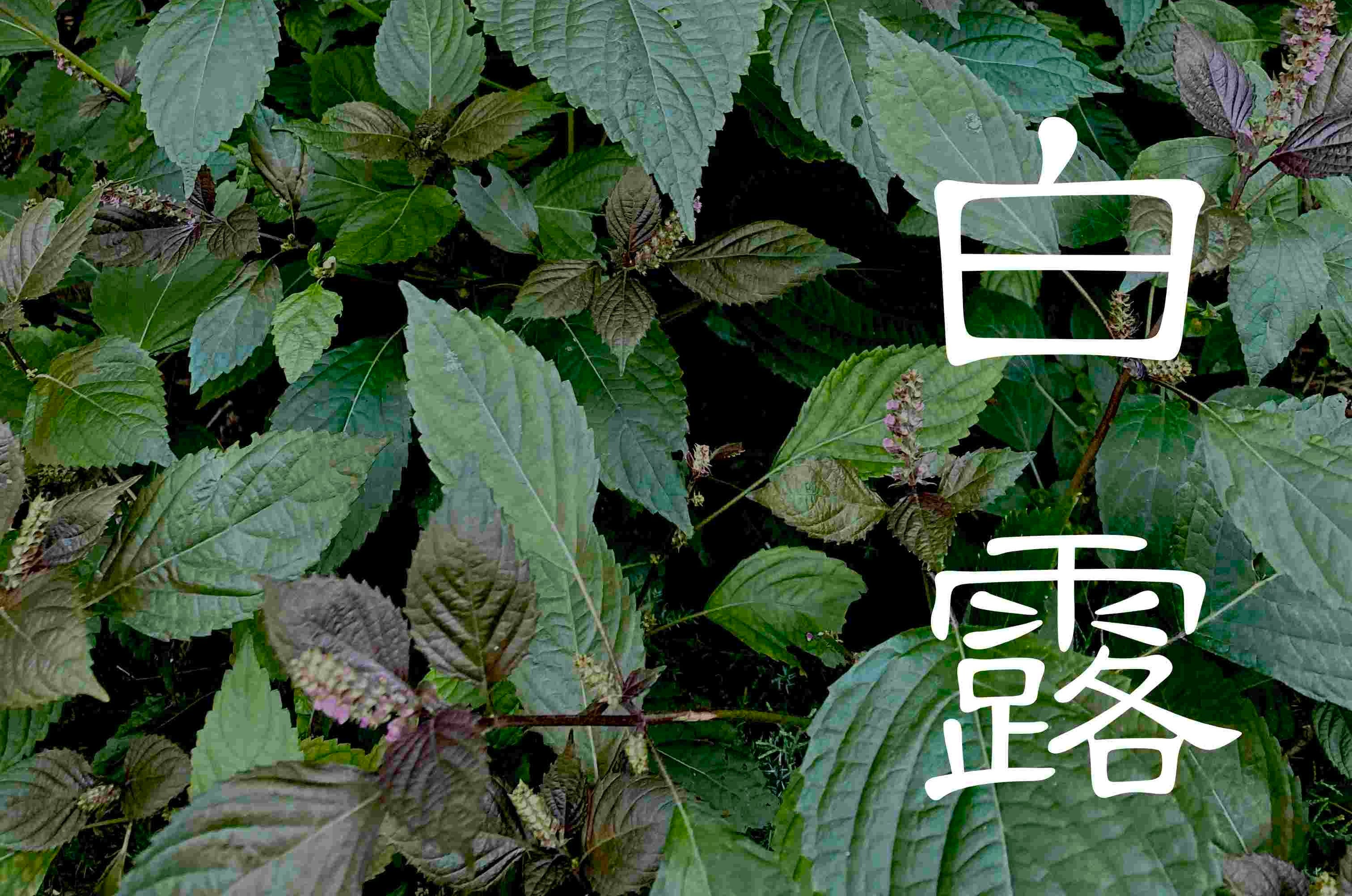
Meaning “White Dew,” Bailu started on September 7th, which makes me about a week late to the table.
Here in Beijing, it’s finally starting to feel like fall. Over the past month, the muggy summer air started drying out, but the heat at midday could still be pretty murderous. Not so Bailu. Leaving the house yesterday evening, I thought the unimaginable—perhaps I need a jacket.
In the north, Bailu is when fall really starts, and marks the beginning of the busy harvest season for grains and beans. But that’s about as far as we can generalize for a country as big as China. Further south, this is a slack season between rice harvests. While we are enjoying the crisp dryness that presages our frozen northern winter, the south is getting hammered by typhoons.
Zhongqiu, the mid-Autumn Festival, takes place during Bailu. Mid-Autumn is the festival that gives us mooncakes, whether you want them or not. (My Chinese publishers recently said they wanted to send me a package, quickly adding “don’t worry, it’s not mooncakes.”) With the days getting darker, it also gives us the custom of families separated by great distance looking up at the full moon and thinking of home.
Bailu is also a time to drink tea. Tea trees do grow fast during the southern rainy season, even if the “rainwater tea” isn’t especially prized.
In some parts of the country, it’s the time to make rice wine. Fermenting is a very time-sensitive process, since you need a particular combination of heat and humidity to make it work. Bean pastes can only be made during the hottest part of summer—some have a window as short as one or two weeks each year. In much of the south, Bailu is the time to brew the rice wine known as chengjiu, meaning “fetch wine” since you have to fetch fresh river water to make it.
Foods for this season include all sorts of tubers, especially potatoes. Known in Chinese as “ground beans” “horse bell tubers” and “foreign tubers,” potatoes are known to strengthen the blood and build resistance to disease, all very useful as the weather starts to turn. This is a season to eat fried potato strips. But not deep-fried. Instead, peeled potatoes are cut into thin strips, very briefly parboiled and wok fried at high heat with fresh or dried chiles, adding onion and a splash of dark vinegar at the very end.
Bailu foods also include squash and melon, especially the pumpkins that are just coming into season. Chinese “southern melons,” are oblong but can grow to the same beastly proportions as their American cousins. I’ve grown one that took up the entire back seat of a car. It’s common in China to age watery vegetables like hard squash for at least a few weeks. There’s some art to this. If you choose the right sort of cool, dry place to age your squash, you are rewarded with a more concentrated and complex tasting vegetable. If you instead simply forget and leave that squash in the back seat of your car, you get something else entirely.
So how do you cook them? Like any hard melon, you can add the squash to soup. While many Western cooks would instinctively mash the cooked pumpkin into a paste that becomes a platform for other flavors, Chinese soup simply adds big chunks of melon—unpeeled—to stew in a clear chicken broth, preferably one made from an old hen. Steamed mashed pumpkin can be served as a porridge, often mixed with glutinous rice or earthy millet for additional texture and taste.
Local markets have recently started carrying the smaller, sweeter Japanese-style kabocha squash. I like to hollow these out, fill the cavity with presoaked millet and steam until both squash and millet are cooked. You can also precook the millet separately, or mix in some matching tastes, like raisins or small chunks of long shanyao yams. If you want to add some sweetness, you can top the cooked squash with a spoonful of honey or sweetened coconut milk, but try it plain first. The squash itself brings its own sweetness, and the millet has a lovely taste that you don’t want to cover up.

You can also replace the millet with couscous. Absolutely nobody will try to stop you.
Bailu is also a time to harvest and eat walnuts. Harvesting consists simply of whacking the branches of towering walnut trees with a long stick and doing your best to avoid being bonked on the head by what rains down. Eating gives you a few more options. Walnuts can be candied or blended into a sweet drink that is served hot, but my preference is to use them in cooking dishes, either by swapping parboiled walnuts in place of peanuts or using them as an umami-rich counterpart to lighter tasting vegetables. All-vegetable dishes that combine white-blanched walnuts with shanyao, crunchy green pea pods, and wood ear are a common sight on northern menus, especially during this season.
I
 Thomas David DuBois