I’ve been thinking a lot about pork in my coffee.
To mark the Lunar New Year, Starbucks added a menu of seasonal tastes. Select outlets in China now serve coffee lattes flavored with red dates, black sesame, almond, and the eye-catching standout—Dongpo pork.
At first glance, that last one seems horrific. Dongpo is a deliciously oily dish of braised pork belly, leading one to imagine a cup of coffee topped with a thick layer of gleaming pork fat. In fact, it’s probably much more benign. The advertisement shows nothing more than a stripe of sweetened soy sauce and a skewered sheet of pork jerky nestled in the latte foam.
So, are pork-flavored lattes really the end of the world? In a sense they are.
Before I started learning about China’s food, I spent two decades studying its religion, especially the apocalyptic variety. I learned that every religion has an idea of time. The calendar of rituals moves believers through the year, heightening awareness to moments of significance. Other rituals mark the key moments of life and death.
Religion also tells us when time is up, in a cosmic sense. It might not seem especially useful in daily life, but knowing how everything ends also tells us what makes up the world we are in. The two worlds, and the two types of time, are related to each other.
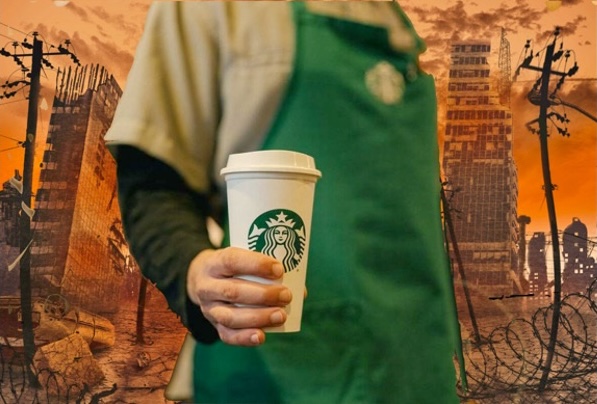
Which brings us back to pork-flavored lattes. When I first heard about these, I joked that the End Times were indeed upon us. Pork-flavored coffee isn’t really the end of the world, but does defy the world we know by transgressing an unspoken boundary. Just like having turkey tells us that it is Thanksgiving, the combination of breakfast beverage and greasy meat alerts us to a fundamental change in the rules.
The sheer oddness of this combination has whipped up attention and is certain to drive sales. Starbucks might not do great coffee, but they sure do have great marketing.
 Thomas David DuBois