China’s southern Guizhou isn’t so much out there as up there. It’s part of the Yun-Gui Plateau, the first of a series of steps that ascend higher and higher into the clouds until eventually you’re in the snowcaps of Tibet.

It’s also where I spent a few weeks last summer.
Invited by friends from a university in Sichuan to come along for their graduate training program in field studies, I took a train south to the lovely city of Kaili. They did the same from the other direction, and from there it was an hour or so bus ride to the village where we would all spend the next few weeks.
Our students spent each day walking around and gathering information on different topics. In the evening we met in a big group to exchange notes about their experiences interviewing strangers.
But I had a different mission. I wanted to use the time to piece together a methodology for conducting field studies on food, starting with the unique cuisine of Guizhou. Here’s some of what I found.
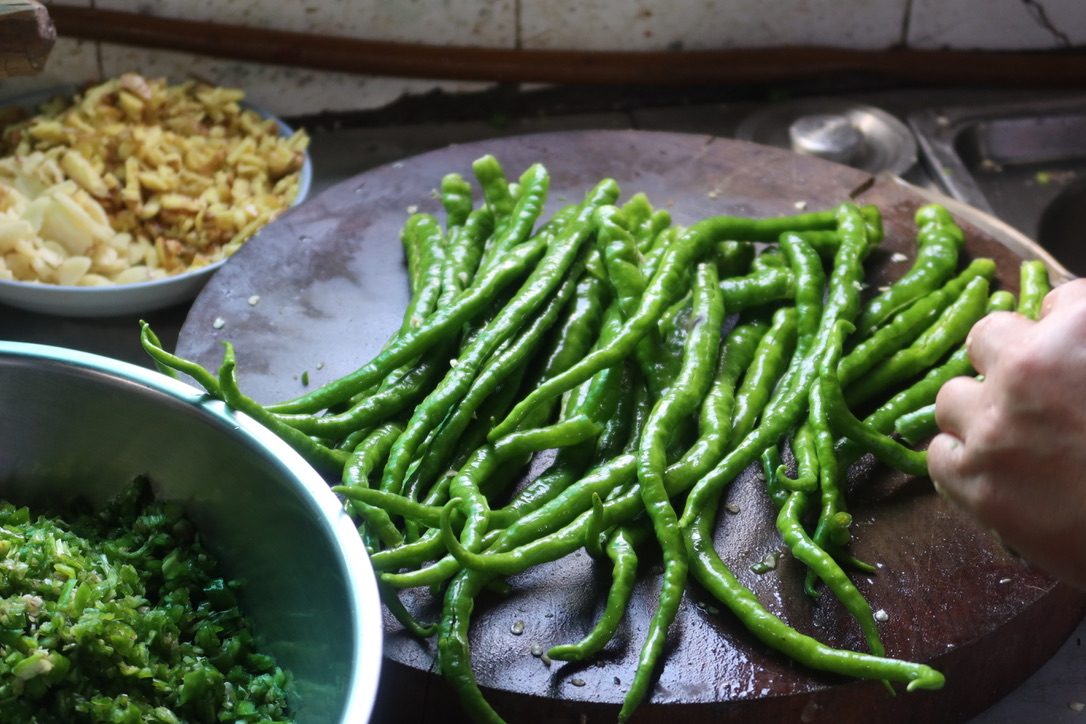
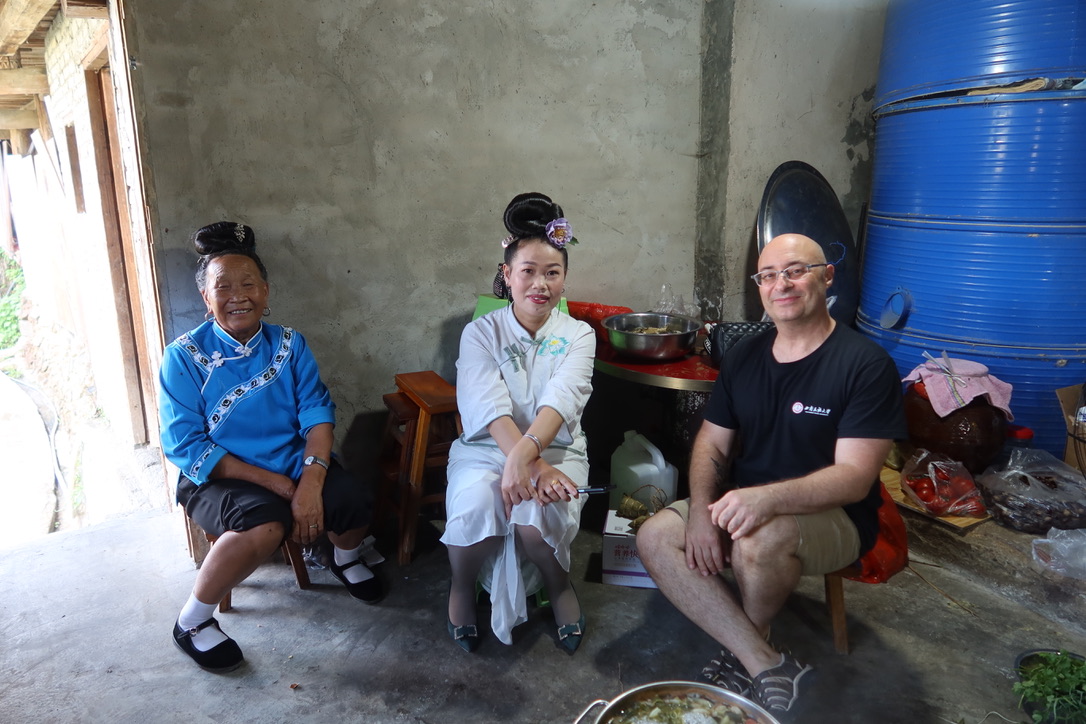
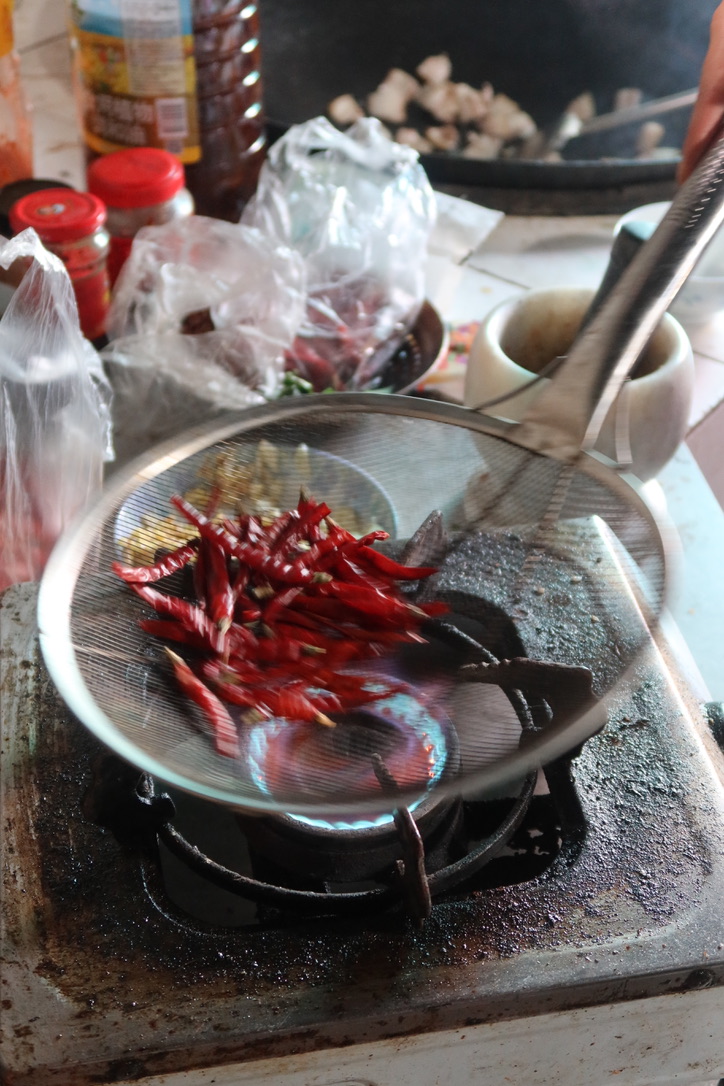


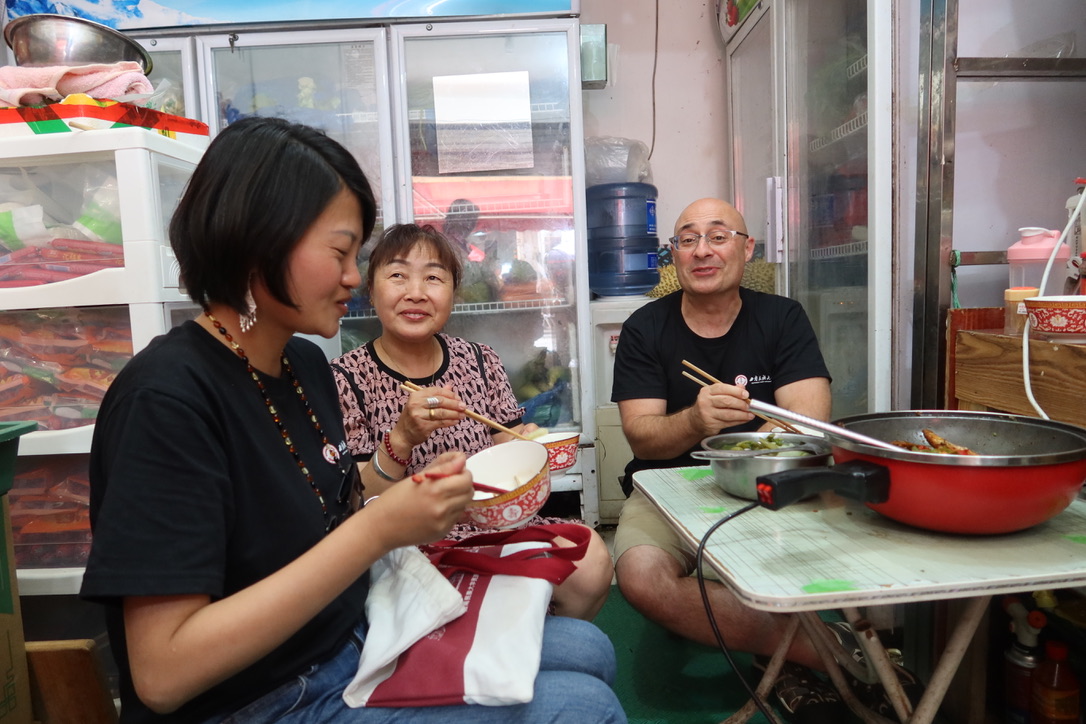


Guizhou food is on the whole light and quite simple. But it’s pretty heavy on the salt. Once a luxury, salt is still the taste of prosperity.
Salt yes, but soy sauce not so much. We have left the land of fermented beans for one of fermented chilis. As far as flavors, the foundation of Guizhou cuisine is a fermented sour chili sauce called zaolajiao 糟辣椒.
Zaolajiao 糟辣椒
– fresh red chilis chopped into paste
– chopped garlic
– salt
– fresh (not distilled) rice wine to kickstart fermentation
Mix ingredients inside a tanzi fermenting vat. Can use after one month.
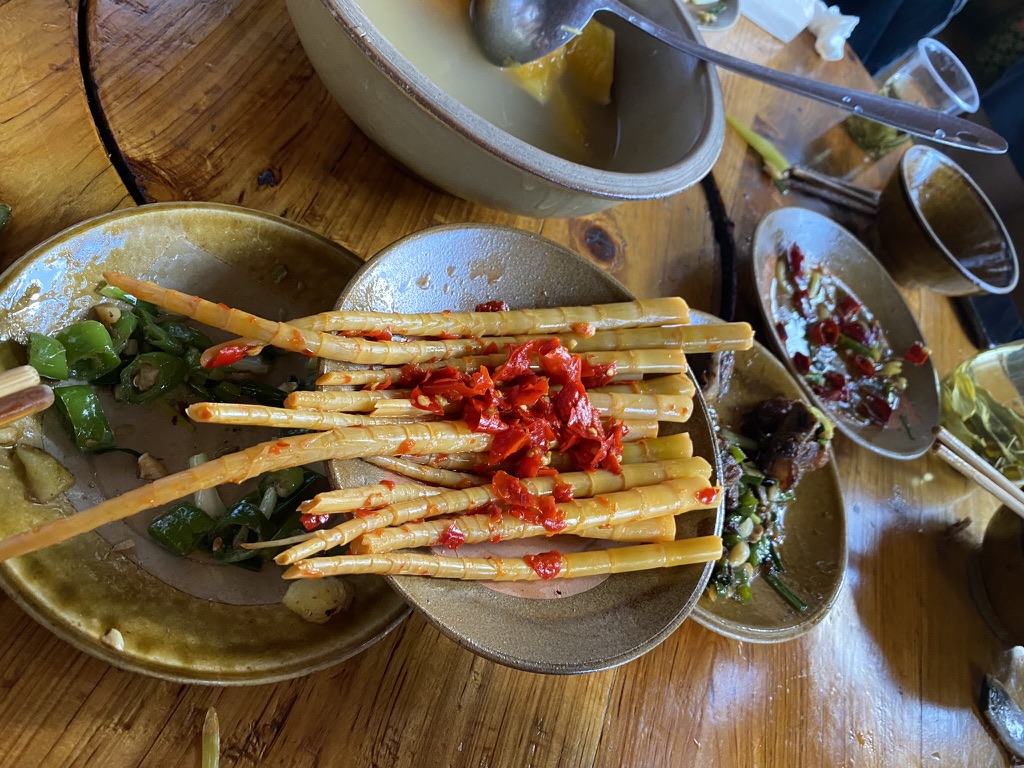
Until relatively recently, zaolajiao was about the only spice available. It was only after people started leaving the area to work that they brought back new tastes for ingredients like soy sauce. But the taste of fernemnted soybeans hasn’t yet taken root. When I asked people about local cuisine, they would start by telling me about the fancy resturants in Kaili. But sooner or later the truth would come out: they didn’t really care for the taste of restaurant food, or the prepared sauces now available in shops. That’s for tourists, they said.
Families also ferment their own cabbage and bamboo. These are always sour and give Guizhou dishes a light, fresh taste.
The other unmistakable taste is the fresh-pressed rapeseed oil. Sold in giant plastic tubs, the dark yellow-green oil gives every dish a slightly bitter, smoky quality
All of the other tastes come right out of the garden: onions, garlic, ginger, and fresh Sichuan peppercorns. With not a supermarket in sight, so does the produce. Every house has a garden full of leafy greens, chilis and eggplants, along with a couple of busy chickens and fish swimming between the rice seedlings. The fish are added as minnows when the fields are flooded. They grow up with the rice, adding nutrients and keeping away pests. When the time comes, they become a meal themselves.
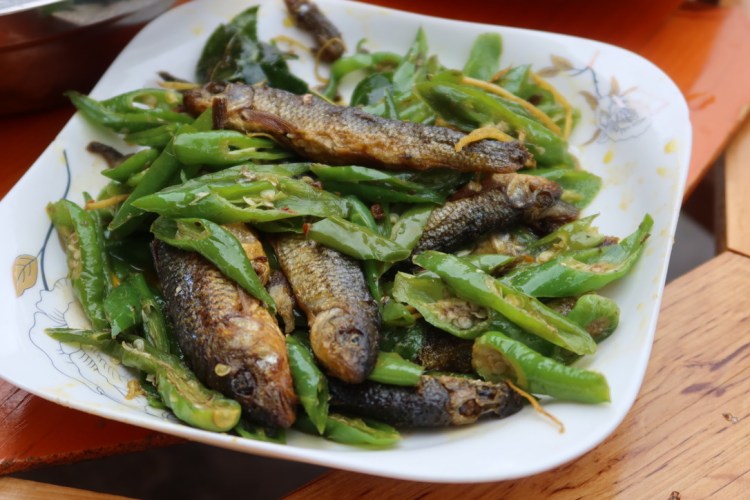
Rice paddy fish
- Clean and gut six small river fish. Pan fry in 1/2 cup oil (half submerged).
- Remove fish and allow to rest.
- Stir fry bias-cut green chilies with garlic, ginger and salt
- Return the cooked fish to the pan and reheat to infuse with taste
The chilis used here are 菜椒, and taste more vegetal than hot. I’ve also seen this dish made with small tomatoes added to the peppers, or sometimes a dash of soy sauce at the end. But that’s about the extent of the variations. The elegance of this home-style dish is in its simplicity.
Could you make this at home? You most certainly could, using any light tasting white fish–lake perch or even tilapia. A whole fish is better than fillets, and a smaller fish will absorb the taste of the sauce better than a large one. If you so want to use a large fish, make sure to score the skin with a knife before frying.
 Thomas David DuBois