It’s been a real journey with this one.
The original 19th-century recipe called for filling a hollowed-out pumpkin with soy sauce and letting it cure for six months. We were promised an exquisite result, but instead got a bizarre-looking table centerpiece that quickly started to rot.
But I wasn’t ready to give up on this one just yet. The idea of enhancing the natural flavors in the curing pumpkin just sounded so promising. That depth of flavor is the difference between real ham and say, bacon bits, which have only the taste of salt.
Eventually I tried adapting a 17th-century recipe for pickled ginger. That one soaks chunks of fresh ginger in a mix of soy sauce, sugar, and spices like perilla leaves and orange peel, turns the mix out into a porcelain bowl and leaves it uncoverede for the summer. Over time, the liquid evaporates away and you get intensely flavored bits of rock-hard ginger that you can eat like candy.
For my version, I pickled big chunks of squash in a mix of soy sauce, sugar, ginger and cooking wine. After two weeks, I spread them out to dry. (This is why I don’t update my blog very often — these things take time!) After a month, I ended up with a tiny little pile of shrivelled little nuggets that looked so uninspiring that I almost threw the lot away.
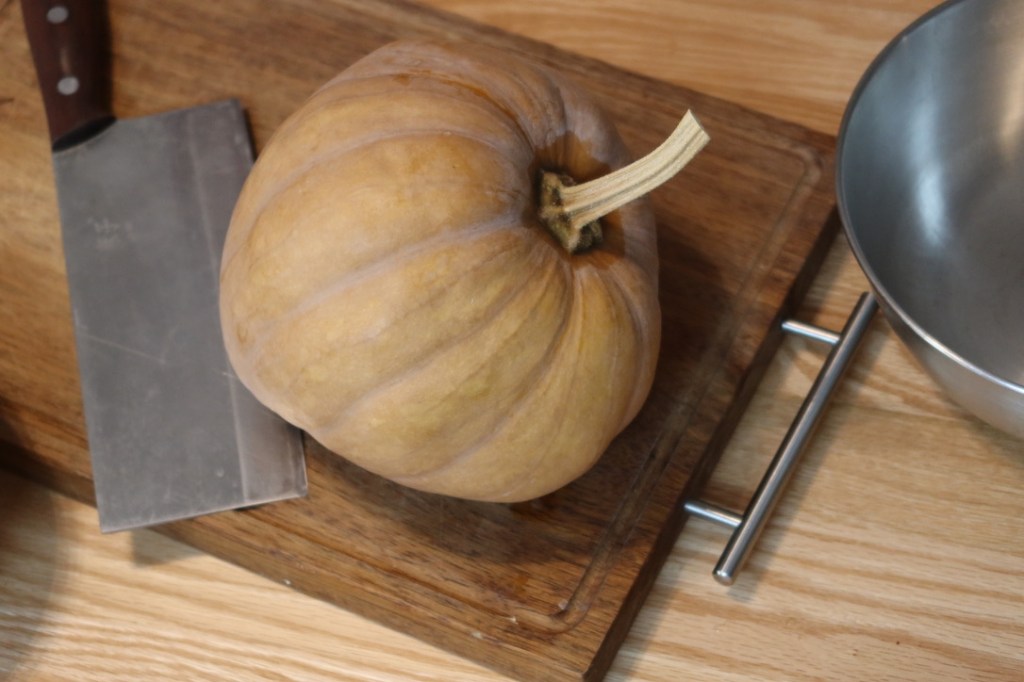

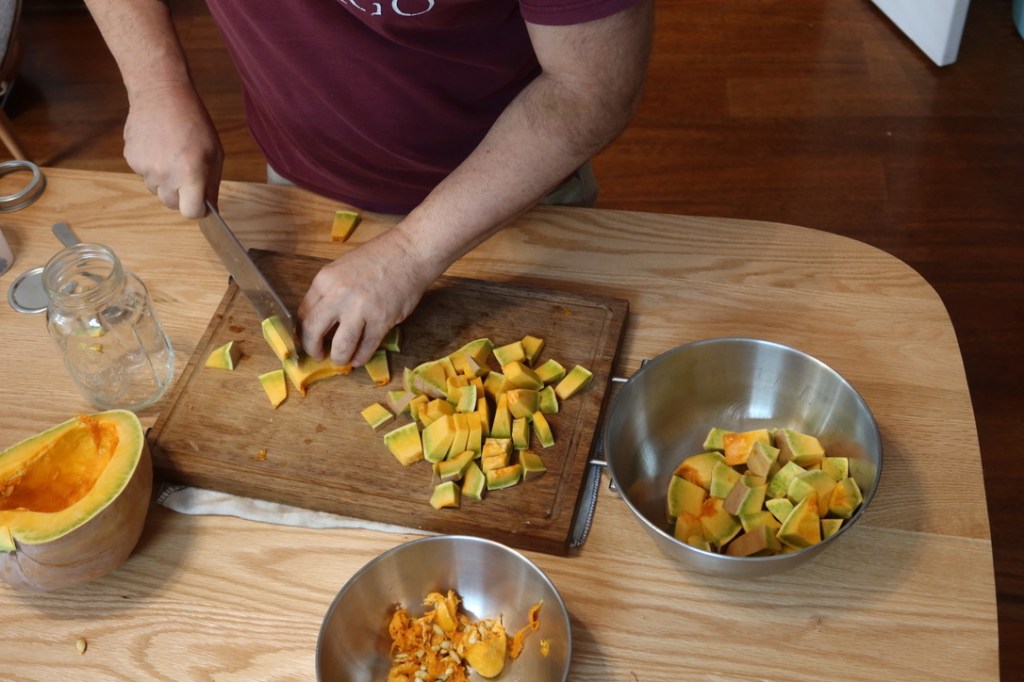
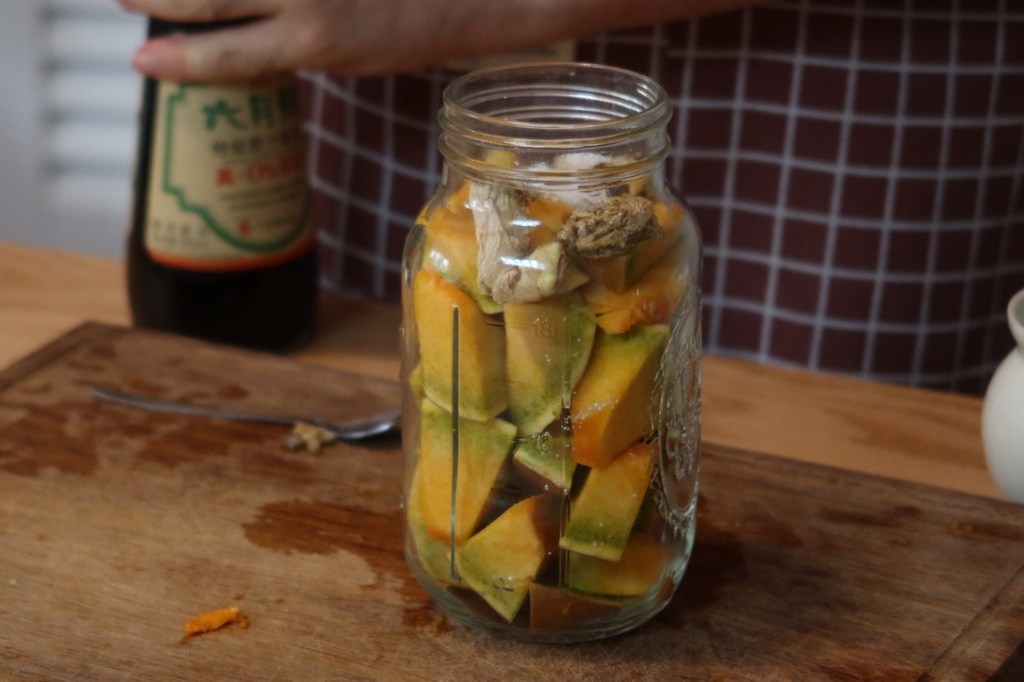
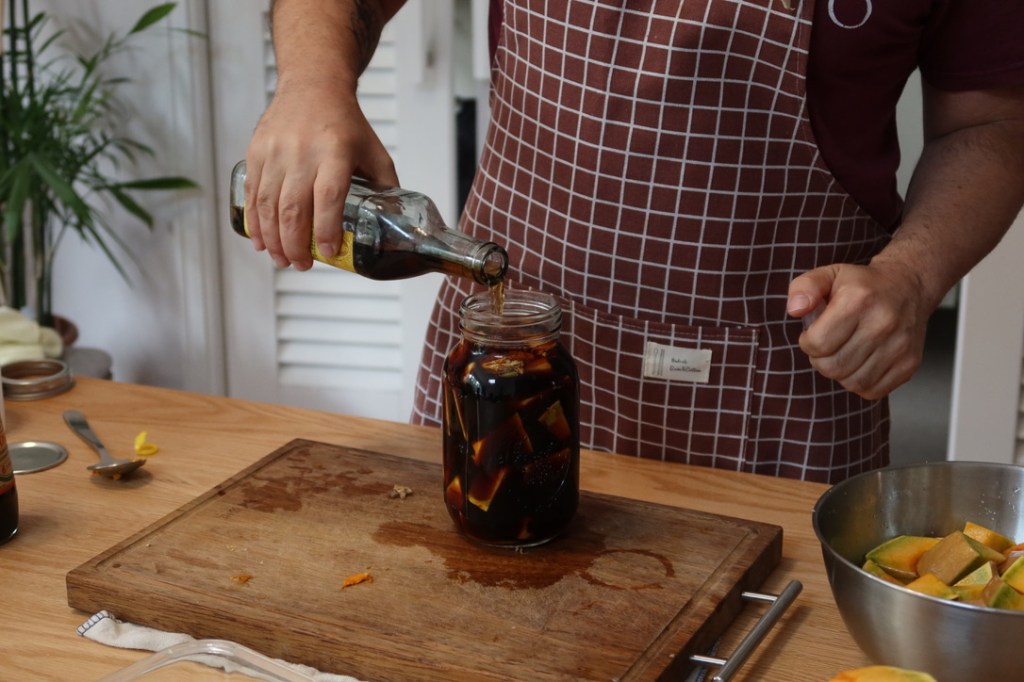
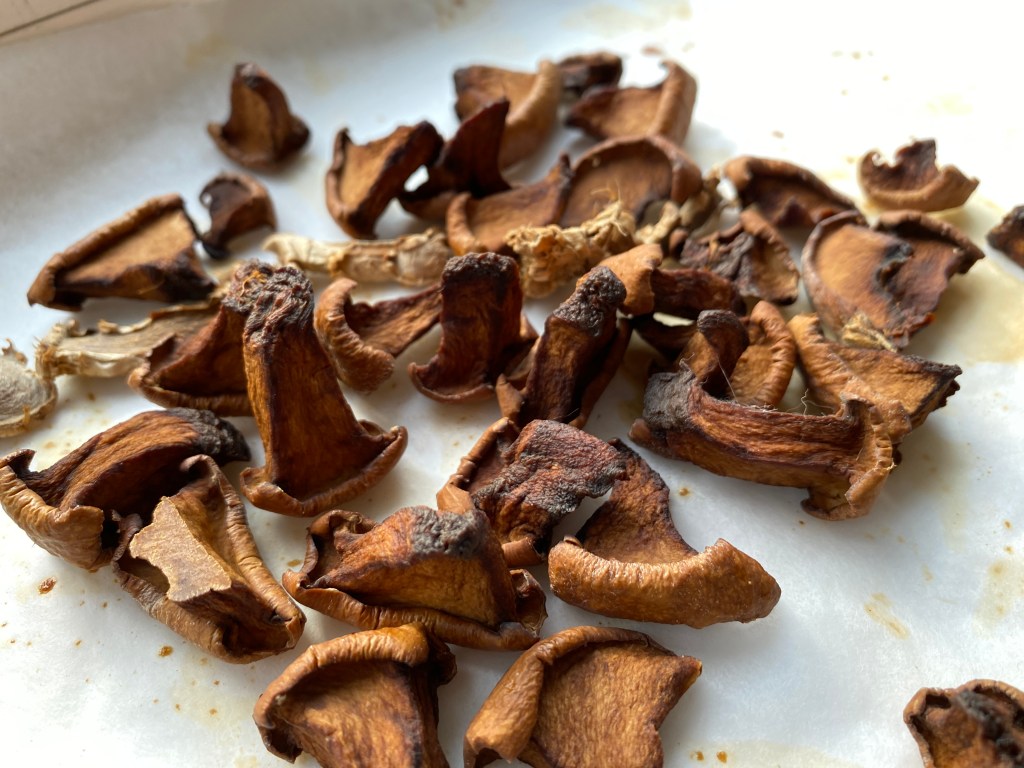
Luckily, I didn’t do that. Instead, I tried a small piece–and guess what, it was really tasty.
I had originally thought that these might end up tasting like dried soy sauce and nothing else. Instead, the cured squash had saltiness, sweetness, and the vegetal flavor of the squash itself each arriving in discernible waves. The taste actually did resemble dry-cured ham, maybe a piece that had gotten a bit dried out.
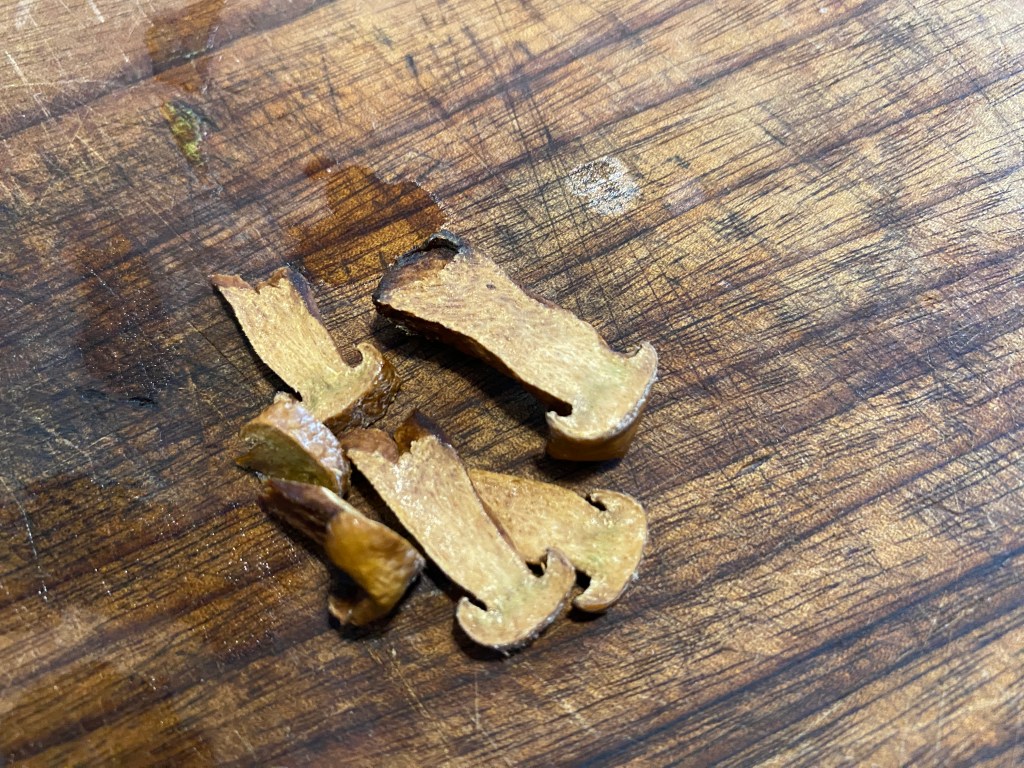
I tried cutting the “ham” into small pieces and adding it to hot rice porridge, and also tried lightly frying it before adding it to cooked rice. Both steps brought out a lot more of the flavor, and also improved the texture. The next step would be to use the cured squash to make soup broth–just like you would do with dried shitake mushrooms.
I’ll also try playing around with the spices a bit. More ginger, orange peel, or perilla leaves would all bring out new layers of flavor.
Verdict: unexpected success!
It’s still not ham, but this cured squash was easy and inexpensive, and produced something that I could see having plenty of uses–ground up and added as a flavor boost, grated over a squash soup, or added in chunks to a pasta sauce. Well that’s three, anyways.
 Thomas David DuBois