Today smelled delicious, just ask my neighbors.
Starting at about 8 am, I started cooking the three Chinese gaotang soups from our nineteenth-century Treatise on Vegetarianism.
- Soup 1 蚕豆汤: 300gm of dried fava beans, soaked overnight and cooked with 1 liter of water. Cooked on low for three hours in an Instapot (slow cook setting, not pressure cook)
- Soup 2 蘑菇汤: 120gm dried mushrooms (deer ear and shitake). Cooked on stovetop with 1 liter water, covered low simmer for 2 hours, with some additional water added to replace any lost to steam.
- Soup 3 莱菔汤: One big daikon plus one medium sized carrot (600 and 270 gm, respectively), cut into strips, fried in sesame oil, and simmered in clay pot with 1 liter water and 1/4 cup soy sauce for about 2 hours.
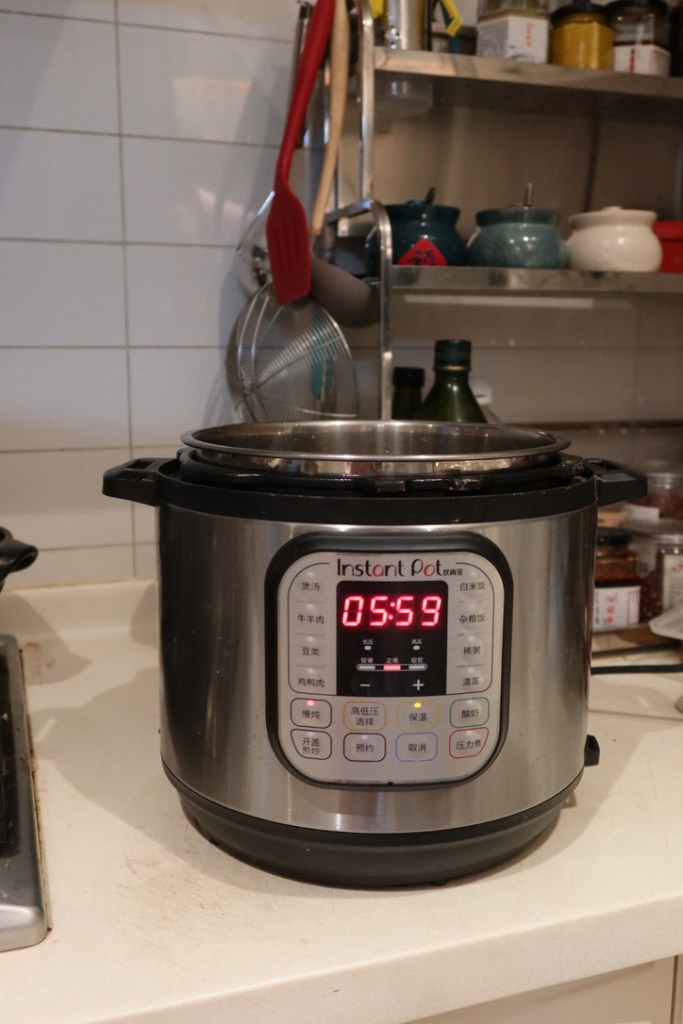


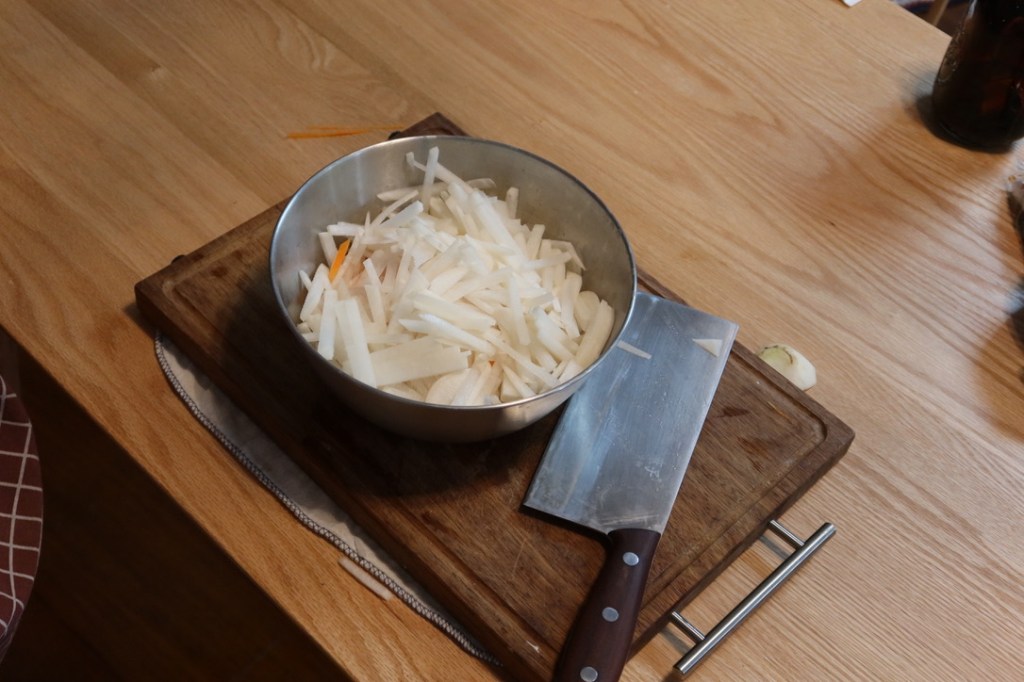
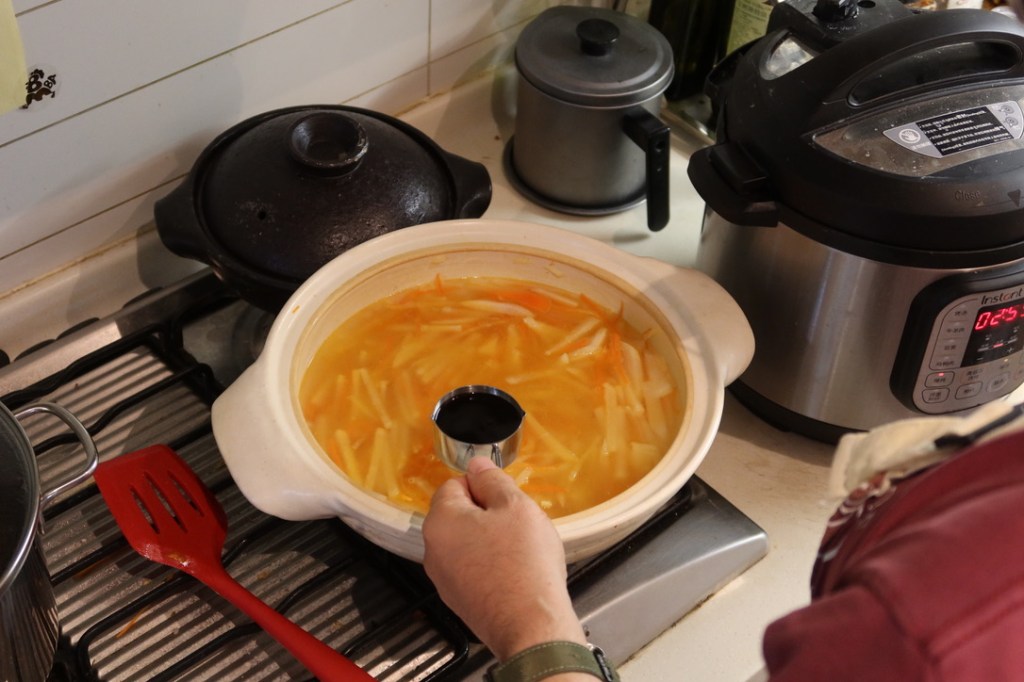
After that, I let each one return to room temperature and added about a half teaspoon of salt to the first two, since the third already had soy sauce.
The results:
- Soup 1 蚕豆汤: Pretty darn beany. Tasted a bit like the packing water from canned beans, although without the starchy aftertaste. Thickest consistency of the three.
- Soup 2 蘑菇汤: Best taste. Strong, smoky mushroom flavor.
- Soup 3 莱菔汤: Most vegetal. Pre-frying with sesame oil gave the soup a nice consistency.
So, each soup tasted exactly like its one main ingredient. No surprises there.
BUT, if you’ll remember, the Treatise on Vegetarianism also talked about mixing the different soups. This is where things could get more interesting. I tried a few permutatations and found that a favorite: one part fava bean to three parts mushroom, or three parts daikon.
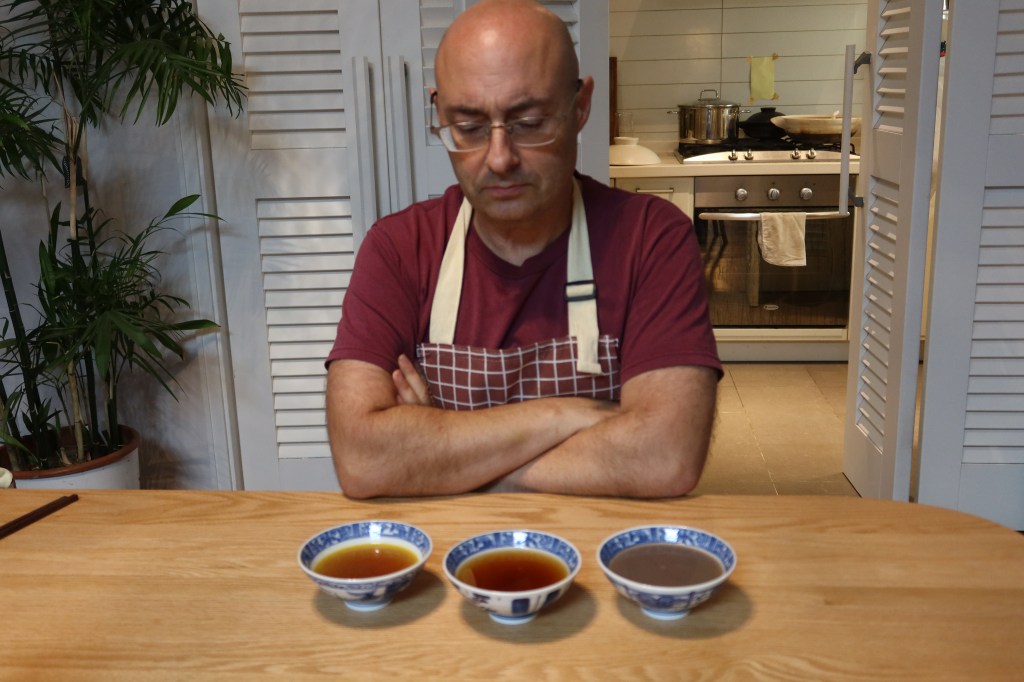


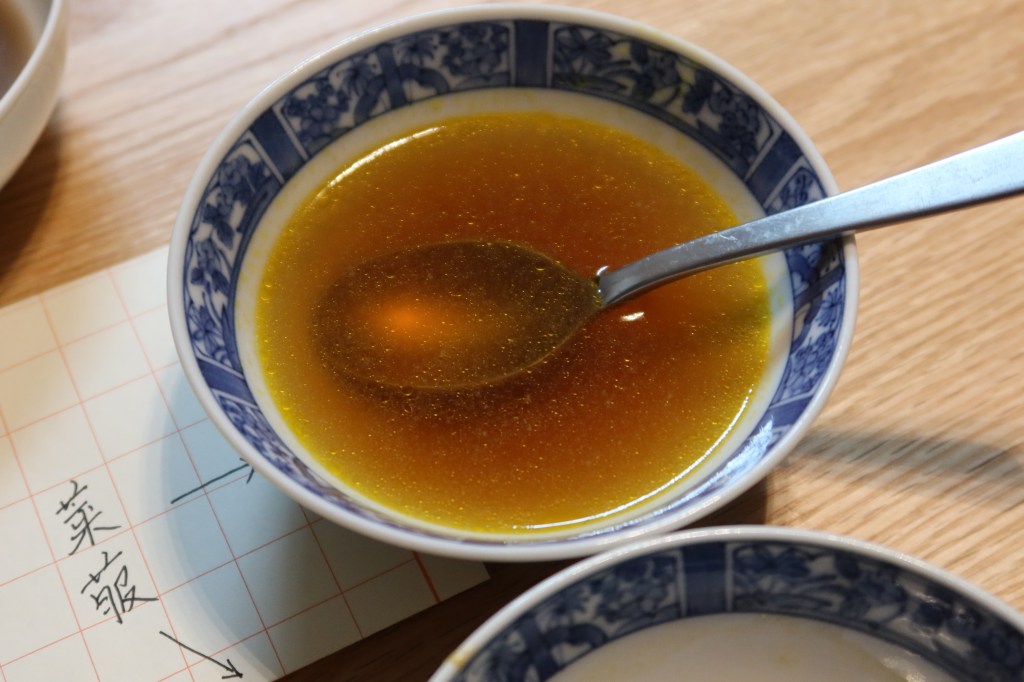
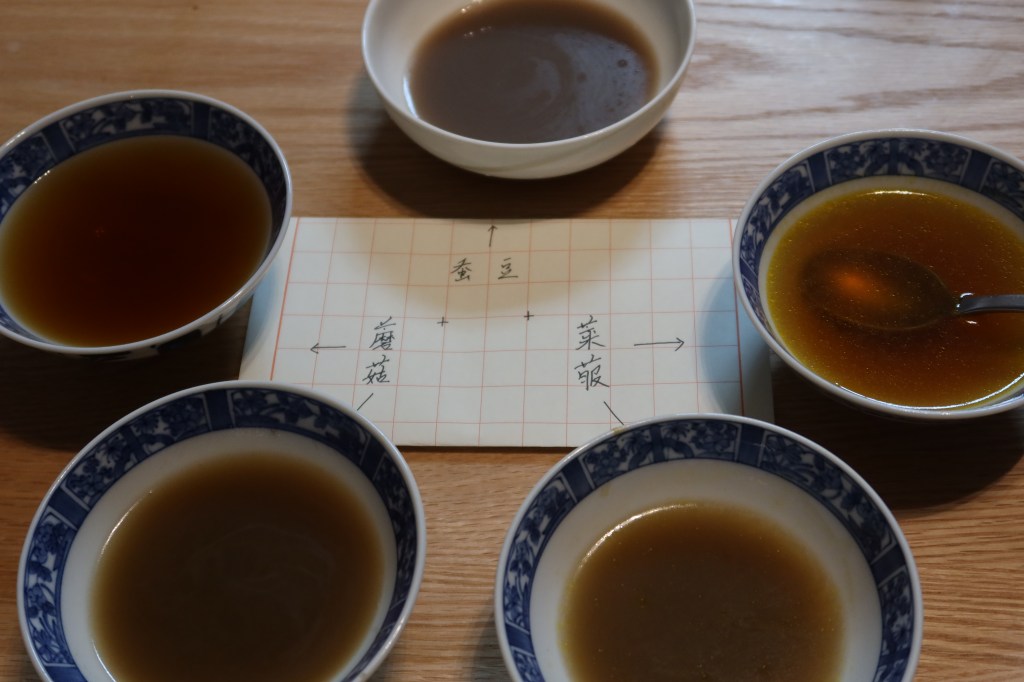
On its own, the bean soup is too strong, but mixed with one of the other two soups, it adds just enough taste and body. Either mixture would make a lovely soup or noodle stock, or could be cooked down and thickened with a bit of starch to use for braising vegetables, exactly like you would with a pork or chicken gaotang. Or just drink it straight — I’m having some right now.
In fact, there’s really no need to make them separately. Just combine the steps thusly:
Vegetarian gaotang–the winner!
Step 1: 75 grams (about 1/2 cup) dried fava beans (substitute dried black-eyed peas if needed), soak overnight and simmer in 1 litre of water until soft (don’t add salt to dried beans!)
Step 2: add either
- 75 grams dried mushrooms (shitake is best, but any dried mushroom will work)
– or – - 600grams daikon and carrot sliced thin and fried to bring out the taste, and 4 tablespoons of soy sauce
Step 3: cover and simmer for another 2 hours, adding water when necessary
Step 4: strain and add salt (but not much)
Besides an extremely tasty soup stock, you also get some nicely cooked vegetables. And what sort of monster doesn’t like fava beans?
 Thomas David DuBois
Why do you think fava beans were chosen in the original recipe? Are they more flavorful or savory than other legumes?
In Guiyang I had a really nice 豆米火锅, which 下厨房 insists are 蚕豆 or 四季豆(?) but which tasted closer to pinto beans. The secret for that seems to be stir frying the beans (like refried beans), so that [burned] fat and bean flavors are infused in the oil, then remixed with the bean stock. Sometimes there are also aromatics like 花椒 姜 蒜苗 etc. Often 猪油.
That’s a good question! Fresh broad beans are eaten as a green vegetable all over north China, but dried are another matter. When I see dried fava beans in rural markets, the usual explanation is that they are mixed into cattle feed. When I put this recipe on Chinese social media, I got a lot of “you’ve got to be kidding” sort of responses specifically because of the beans. But fava beans definitely give a stronger taste than any other bean I could think of.
I missed out on 豆米火锅 the last time I was in Guizhou, but asked some friends who sent back pics of what looked like kidney or pinto beans. Everyone mentioned using a lot of rendered pork fat, but not spices in the soup itself. Instead, they do the usual mix of chilis, garlic, and soy sauce as a dipping sauce, which makes sense for hot pot.
I guess the livestock eat well! Or have smelly breath. Thanks for the explanation.