It has been a while since my last post.
Over the past few months, China in Seven Banquets has gone off to press, I have moved house and have been busy making up for two lost years of travel, and (here’s the kicker), I topped it all off with a surprise visit to the hospital. A life-saving one.
I have flirted for years with the idea of cutting meat (all or most) out of my diet, but it took this particular incident to finally push me to get serious. And what timing! With China in Seven Banquets off to press, I am ready to start systematically going through my ever-growing collection of Chinese food books.
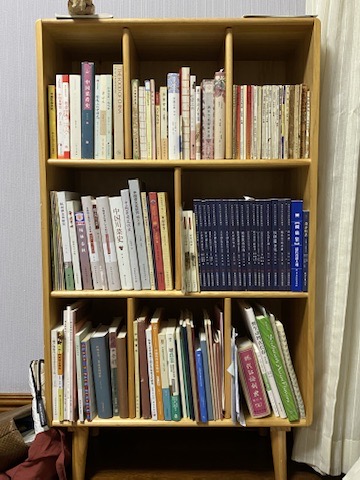
And where better to start than with China’s extensive literature on vegetarianism?
China has about twenty centuries of Buddhism under its belt, which translates to a lot of time to learn to cook without meat. Over the past few decades many of these techniques have been lost or forgotten. Countless temples were razed and emptied of monks, and industrial food chains have had their way with any tradition that managed to survive.
But we historians are a crafty lot. We can read books, and those of us who went to cooking school even know how to follow instructions.
So that’s my plan for the next few weeks: I’m going to start through my collection of vegetarian culinary treatises — these start in roughly the 12th century — and when I see something fun, I’ll cook it and post it on this blog.
Our first book is the last, chronologically speaking.

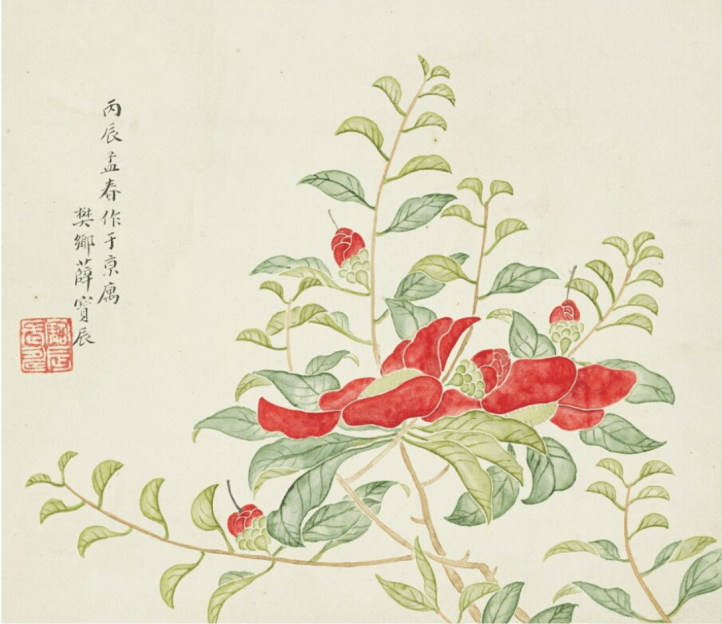
The Brief Treatise on Vegetarianism (Sushi shuolüe 素食说略) was written by Xue Baochen 薛寶辰 (1850-1926). Xue was from near the city of Xi’an (the one with the terracotta warriors, but he wouldn’t have known that). Besides being a scholar, he also was an accomplished calligrapher and painter.
Seriously, have a look at a sample from his Book of Flowers:
So that’s the author, now how about the book?
The Brief Treatise on Vegetarianism contains about 160 recipes, divided into four big sections:
1. Pickles and sauces, 29 entries
2. Mushrooms and vegetables, 90 entries
3. Beans and tofu, 18 entries
4. Rice and breads, 29 entries
Some of these entries are very simple, deceptively so. The first entry is “water” which doesn’t really seem like something that would call for a recipe. But this short entry introduces a lot of background ideas that are worth understanding, especially since the next entry is soy sauce, which is mostly water.
So let’s start there. Meanwhile, I’ll go out and buy some new fermenting vats.
 Thomas David DuBois